Thursday, March 5, 2009

March 5: James Bradley


James Bradley
March 1693 – July 13, 1762
(exact date of birth is unknown)

James Bradley was an English astronomer and Astronomer Royal from 1742. He is best known for discovering the aberration of light while attempting to detect stellar parallax.

Bradley entered Balliol College, Oxford, on March 15, 1711, and took degrees of B.A. and M.A. in 1714 and 1717 respectively. His early observations were made at the rectory of Wanstead in Essex, under the tutelage of his uncle, the Rev. James Pound, himself a skilled astronomer, and was elected a fellow of the Royal Society on November 6, 1718. In 1721 he was appointed to the Savilian chair of astronomy at Oxford.

Bradley worked with Samuel Molyneux until Molyneux's death in 1728 trying to measure the parallax of Gamma Draconis. However, while not finding the expected parallax, they instead found an unexplained motion which shortly after Molyneux's death Bradley realized was caused by the aberration of light. The discovery of the aberration of light, which was conclusive evidence for the movement of earth and hence the correctness of Aristarchus and Kepler's theories, was announced to the Royal Society in January 1729. 

The measurement of parallax had been the Holy Grail of astronomers since the time of Aristarchus and Archimedes. If the Earth orbited round the Sun, as postulated by Aristarchus and formulated much later by Copernicus, then nearby stars should show some apparent change of position over an annual cycle because of the changed viewpoint from the Earth at each extreme of its orbit. This is the same effect as when nearby objects seen from the window of a moving train, appear to change position much faster than distant objects — ‘parallax’.

Unfortunately for Helio-centrists (notably Galileo), the best endeavours of astronomers for centuries had produced no reliable evidence whatsoever of stellar parallax — just as expected by the Geo-centrists: if the Earth was stationary at the centre of the universe then of course the stars would not show any change of position.

The best the Helio-centrists could do was to argue that the stars were so hugely distant that the parallax effect was tiny and beyond the ability of present instruments to detect. Succeeding generations worked to build better instruments and devise new strategies for measurement. When Bradley had directly detected the effect of the Earth’s motion around the Sun, Aristarchus, Copernicus and Galileo were vindicated:
“eppur si muove” — and yet it does move.


This aberration also allowed Bradley to accurately estimate the speed of light which had previously been shown to be finite by the work Ole Rømer and others. The observations upon which it was founded were made at Molyneux’s house on Kew Green. Bradley did not announce the supplementary detection of nutation until February 14, 1748, when he had tested its reality by minute observations during an entire revolution (18.6 years) of the moon’s nodes. 

In 1742, he had been appointed to succeed Edmund Halley as Astronomer Royal; his enhanced reputation enabled him to apply successfully for a set of instruments costing GB£1,000; and with an 8-foot quadrant completed for him in 1750 by John Bird, he accumulated at Greenwich in ten years materials of inestimable value for the reform of astronomy. A crown pension of GB£250 a year was conferred upon him in 1752.

He died on July 13, 1762. The publication of his observations was delayed by disputes about their ownership; but they were finally issued by the Clarendon Press, Oxford, in two folio volumes (1798, 1805). The insight and industry of Friedrich Wilhelm Bessel were, however, needed for the development of their fundamental importance.

The Lunar promontory Mons Bradley is named in his honor.


Wednesday, March 4, 2009

March 4: Sir Alfred Patrick Caldwell-Moore


Sir Alfred Patrick Caldwell-Moore
b. March 4, 1923

Patrick Moore, CBE, HonFRS, FRAS, is an English amateur astronomer who has attained prominent status in astronomy as a writer, researcher, radio commentator and television presenter of the subject and who is credited as having done more than any other to raise the profile of astronomy among the British general public. 

Sir Patrick is a former president of the British Astronomical Association, co-founder and former president of the Society for Popular Astronomy, author of over 70 books on astronomy, presenter of the longest running television series (with the same original presenter), The Sky at Night on the BBC and a famous figure on British television. He is well known for his rapid mode of speech, trademark monocle, poorly fitting blazers, extremely high trouser line and a fondness for the xylophone.

Sir Patrick is also an accomplished composer. He is entirely self-taught in music. His favourite genres include 19th century Viennese waltzes and marches, but he has also turned to ragtime, polkas, and a nocturne. In 1981 he played a xylophone solo in a Royal Command Performance.

He developed an interest in astronomy at the age of six and was elected to the British Astronomical Association at the age of 11. Moore eventually set up home at Selsey in Sussex, where he constructed a home-made reflecting telescope in his garden and began to observe the Moon. He was fascinated by the subject and he is now acknowledged as a specialist in lunar observation, one of his particular areas of expertise being the study of the glimpses of the Moon's far side that are occasionally visible due to the Moon's libration. He was also an early observer of Transient lunar phenomena: short-lived glowing areas on the lunar surface.

On 26 April 1957, at 10:30 pm, in an event that was to be a landmark of his career, Moore presented the first episode of The Sky at Night, a BBC television programme for astronomy enthusiasts. Since then, he has presented every episode each month, excepting July 2004, because of a near-fatal bout of food poisoning.

Patrick Moore has undertaken significant research in astronomy. In 1959, the Soviet Union used his charts of the moon to correlate their first pictures of the far side with his mapped features on the near side and he was involved in the lunar mapping used by the NASA Apollo space missions. In 1965, he was appointed Director of the newly-constructed Armagh Planetarium, a post he held until 1968. During the Apollo program, Moore was a presenter of the BBC's television's coverage of the moon landing missions. He compiled the Caldwell catalogue of astronomical objects and in 1982 asteroid 2602 Moore was named in his honour.

Moore has written over 70 books on astronomy, all of them typed on a Woodstock typewriter of 1908 vintage, which he has always preferred to any more modern device. After the BBC withdrew financial support, he independently produced a 50th anniversary DVD of his life and work titled 'The Astronomical Patrick Moore'.

In 1945, Moore was elected a Fellow of the Royal Astronomical Society. In 1968, he was appointed OBE and advanced to CBE in 1988. In 2001, he was knighted as a Knight Bachelor "for services to the popularisation of science and to broadcasting". In the same year, he was appointed an Honorary Fellow of the Royal Society. In June 2002, he was appointed as Hon. Vice President of the Society for the History of Astronomy.

During a podcast of The Ricky Gervais Show in 2006, he was chosen by Karl Pilkington as one of six people who ought to re-start and educate human life on an imaginary uninhabited planet.


Tuesday, March 3, 2009

March 3: Ralph Asher Alpher


Ralph Asher Alpher
March 3, 1921 - August 12, 2007

Ralph Alpher was an American physicist best known for his theoretical work on the origin and early evolution of the Universe. In 1948, together with Hans Bethe and George Gamow, he suggested how the abundances of chemical elements could be explained as a result of thermonuclear processes immediately after the Big Bang. This work became known as the “alpha, beta, gamma” theory. As further developed in collaborations with Robert Herman and others, this concept of cosmic nucleosynthesis became an integral part of the standard Big Bang model. It also led to a prediction of the cosmic microwave background. 

Alpher earned his bachelor's degree and advanced graduate degrees in physics from George Washington University, all the while working as a physicist on contract to the Navy, and eventually for the Johns Hopkins University Applied Physics Laboratory. He met eminent Russian physicist George Gamow at the University, who subsequently took him on as his doctoral student. This was somewhat of a coup, as Gamow was an eminent Soviet defector and one of the luminaries on the GWU faculty. It is apparent that Alpher provided much needed mathematical ability to support Gamow's theorizing.

Alpher's dissertation in 1948 dealt with a subject that came to be known as Big Bang nucleosynthesis. The Big Bang is a term coined initially in derision by Fred Hoyle to describe the cosmological model of the universe as expanding into its current state from a primordial condition of enormous density and temperature. Nucleosynthesis is the explanation of how more complex elements are created out of simple elements in the moments following the Big Bang. Right after the Big Bang, when the temperature was extremely high, if any nuclear particles such as neutrons and protons, became bound together (being held together by the attractive nuclear force) they would be immediately broken apart by the high energy photons(quanta of light) present in high density. In other words, at this extremely high temperature, the photons' kinetic energy would overwhelm the binding energy of the strong nuclear force. For example, if a proton and a neutron became bound together (forming deuterium), it would be immediately broken apart by a high energy photon. However, as time progressed, the universe expanded and cooled and the average energy of the photons decreased. At some point, roughly one second after the Big Bang, the attractive force of nuclear attraction would begin to win out over the lower energy photons and neutrons and protons would begin to form stable deuterium nuclei. As the universe continued to expand and cool, additional nuclear particles would bind with these light nuclei, building up heavier elements such as helium, etc. Alpher argued that the Big Bang would create hydrogen, helium and heavier elements in the correct proportions to explain their abundance in the early universe. Alpher and Gamow's theory originally proposed that all atomic nuclei are produced by the successive capture of neutrons, one mass unit at a time. However, later study challenged the universality of the successive capture theory since no element was found to have a stable isotope with an atomic mass of five or eight, hindering the production of elements beyond helium.

Since this dissertation was (correctly) perceived to be ground-breaking, over 300 people attended the dissertation defense, including the Press, and articles about his predictions and a Herblock cartoon appeared in major newspapers. This was quite unusual for a doctoral dissertation. Later the same year, collaborating with Dr. Robert Herman, Alpher predicted the temperature of the residual radiation (known as cosmic background radiation) resulting from the hypothesized Big Bang. However, Alpher's predictions concerning the comsic background radiation were more or less forgotten and they were rediscovered by Robert Dicke and Yakov Zel'dovich in the early 1960s. The existence of the cosmic background radiation and its temperature were measured experimentally in 1964 by two physicists working for Bell Laboratories in New Jersey, Arno Penzias and Robert Wilson, who were awarded the Nobel prize in physics for this work in 1978. 

Although his name appears on the paper, Hans Bethe had virtually no part in the development of the theory, although he later worked on related topics; Gamow added his name to make the seminal paper's title a pun on "Alpha-Beta-Gamma" (α,β,γ), the first three letters of the Greek alphabet. Thus, Alpher's independent dissertation was first published on April 1, 1948 in the Physical Review with three authors.

Alpher and Robert Herman were later awarded the Henry Draper Medal in 1993. They were also awarded the Magellanic Premium of the American Philosophical Society in 1975, the Georges Vanderlinden Physics prize of the Belgian Academy of Sciences, as well as significant awards of the New York Academy of Sciences and the Franklin Institute of Philadelphia — in other words, nearly every significant professional recognition saving the Nobel Prize. Two Nobel Prizes in physics have been awarded for empirical work related to the cosmic background radiation — in 1978 to Arno Penzias and Robert Wilson and in 2006 to John Mather and George Smoot. Alpher and Herman (the latter, posthumously) published their own account of their work in cosmology in 2001, Genesis of the Big Bang (Oxford University Press). Alpher's seminal work was finally recognized in 2005 when he was awarded the National Medal of Science (the Nation's highest scientific honor). The citation for the award reads
"For his unprecedented work in the areas of nucleosynthesis, for the prediction that universe expansion leaves behind background radiation, and for providing the model for the Big Bang theory."
The medal was presented to his son Dr. Victor S. Alpher on July 27, 2007 by President George W. Bush, as his father could not travel to receive the award. 


Monday, March 2, 2009

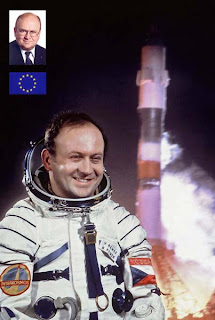
March 2: Vladimír Remek


Vladimír Remek
b. September 26, 1948
March 2, 1978 - the first man in space who was 
neither a US nor Soviet citizen.

Vladimír Remek is the first Czechoslovak in space (son of Czech mother and Slovak father), and the first cosmonaut from a country other than the Soviet Union or the United States. As of 2004, with the entry of the Czech Republic into the European Union Vladimír Remek is considered to be the first European Astronaut. He flew aboard Soyuz 28 from March 2nd to March 10th 1978, for seven days, 22 hours, and 17 minutes. In later life he became a politician and now sits in the European Parliament.

Remek was born in České Budějovice. He graduated from the Air Force Academy and worked as an Air Force pilot. He joined the Intercosmos program as an Army pilot in 1976.

Vladimír Remek was awarded the title Hero of the Soviet Union on March 16, 1978. Later, he became director of the Museum for Aviation and Astronautics in Prague, then representative for the company ČZ in Moscow. He later worked at the Czech embassy in Russia.

He is now a Member of the European Parliament for the Communist Party of Bohemia and Moravia, which is part of the European United Left–Nordic Green Left party group in the European Parliament. He is married and has one child.

The asteroid 2552 Remek is named after him.


Sunday, March 1, 2009

March 1: George Ogden Abell


George Ogden Abell
March 1, 1927 – October 7, 1983

George Abell was an astronomer at UCLA. He worked as a research astronomer, teacher, administrator, popularizer of science and education, and skeptic. Abell received his B.S. (1951), M.S. (1952) and Ph.D. (1957) from the California Institute of Technology. He began his astronomical career as a tour guide at the Griffith Observatory in Los Angeles.

His best known work was his catalogue of clusters of galaxies collected during the Palomar Sky Survey. He analyzed their formation and evolution. He demonstrated that second-order clustering existed, disproving the hierarchical model of Carl Charlier. He also discovered how cluster luminosity could be used as a distance scale. He also collated a famous list of 86 planetary nebula in 1966 which includes Abell 39.

The Abell catalogue is an almost complete list of approximately 4,000 clusters containing at least thirty members up to a redshift of z = 0.2. The original catalogue of clusters in the northern hemisphere was published in 1958. The extended catalogue, including clusters in the southern hemisphere, was published posthumously in 1989 in collaboration with Harold G. Corwin and Ronald P. Olowin.

Abell also co-discovered periodic comet 52P/Harrington-Abell. Together with Peter Goldreich, he correctly determined that planetary nebulae evolve from red giants.

Abell served for over twenty years as a faculty member at the Summer Science Program for high school students. The program memorializes him with its Abell Scholarship Fund. He was involved in the production of the educational TV series Understanding Space and Time and Project Universe.

Abell was passionate about debunking pseudoscientific claims such as those by Immanuel Velikovsky. He was a co-founder of the Committee on Scientific Investigation of Claims of the Paranormal (CSICOP) and contributed articles to their journal, The Skeptical Inquirer.

Abell served as president of the Cosmology Commission of the International Astronomical Union and as president of the Astronomical Society of the Pacific. He was elected a fellow of the Royal Astronomical Society in 1970. He was chairman of the UCLA Astronomy Department from 1968 to 1975 and chairman of the American Astronomical Society Education Committee. At the time of his death, he was to have become editor of the Astronomical Journal effective January 1, 1984.

Asteroid 3449 Abell is named in his honour, as is The George Abell Observatory at the Open University in Milton Keynes, England.


Saturday, February 28, 2009

February 29: Lewis A. Swift


Lewis A. Swift
February 29, 1820 – January 5, 1913

Lewis Swift was an American astronomer. He discovered or co-discovered a number of comets, including periodic comets 11P/Tempel-Swift-LINEAR, 64P/Swift-Gehrels, and 109P/Swift-Tuttle (parent body of the Perseids meteor shower). He also discovered comet D/1895 Q1 (a.k.a. D/Swift) whose debris stream Mariner 4 probably encountered on September 15, 1967. Note, however, comet 54P/de Vico-Swift-NEAT was discovered by his son Edward D. Swift rather than by him. Apart from comets, he also discovered hundreds of nebulae.

In 1878 he believed he had observed two Vulcan-type planets (planets within the orbit of Mercury), but he was mistaken. He discovered his last comet at the age of 79. He was one of the few people to see Comet Halley at two of its appearances, 76 years apart.

Dr. Swift or “Professor” Swift, as he became known, was handicapped by a childhood accident, and devoted his time to the study of astronomy. It appears that his titles were honorary and not the result of the award of any advanced degrees. Indeed, he was an astronomer by avocation only and the operator of a hardware store vocationally. However, his sightings of previously undiscovered comets elevated his reputation and enabled him to give lectures. His notoriety allowed him to begin the process of raising money for an observatory in Rochester.

His patron was the Rochester patent medicine businessman Hulbert Harrington Warner, who financed the building of an observatory for Swift. Warner assured the “famous comet finder” that if Swift could raise the money to purchase a large telescope, Warner would furnish a place to put it. The original estimate for construction of the Observatory was $20,000. Dr. Swift was able to fulfill his part of the bargain and a 16-inch refractor telescope was ordered from Alvan Clark & Son in Massachusetts. Ultimately, the Observatory cost Warner $100,000. The plans for the Observatory also called for an astronomical library, astronomical equipment and a residential space for Dr. Swift and his family.

Warner went bankrupt in the Panic of 1893, which ended his financial support, and Swift then went to California to become director of Mount Lowe Observatory.

The asteroid 5035 Swift is named in his honour, as is the lunar crater Swift. In 1897 he was awarded the Jackson-Gwilt Medal of the Royal Astronomical Society.


February 28: Camille Guillaume Bigourdan


Camille Guillaume Bigourdan
April 6, 1851 – February 28, 1932

Guillaume Bigourdan was a French astronomer. In 1877 he was appointed by Félix Tisserand as assistant astronomer at the Toulouse Observatory, and in 1879 followed Tisserand to the Paris Observatory when the latter became director there.

He spent many years verifying the positions of 6,380 nebulas. He hoped to set a basis for future studies of the proper motion of nebulas; this turned out to be more or less in vain, since distant nebulas will not show any proper motion. However, he did discover approximately 500 new objects, including asteroid 390 Alma (on March 24, 1894).

In 1902 he participated in an effort to redetermine with greater precision the longitude difference between London and Paris. He became a member of the Bureau des Longitudes in 1903, and a member of the French Academy of Sciences in 1904.

He described a method for adjusting equatorial mount telescopes, which was known as "Bigourdan's method".

Bigourdan won the Gold Medal of the Royal Astronomical Society in 1919 for his observations of nebulae for over 25 years. He was director of the Bureau International de l'Heure from 1919 to 1928.


Friday, February 27, 2009

February 27: Bernard Lyot


Bernard Ferdinand Lyot
February 27, 1897 – April 2, 1952

Bernard Lyot was a French astronomer. His interest in astronomy started in 1914. He acquired a 4-inch (100 mm) telescope and soon upgraded to a 6-inch (150 mm). From graduation in 1918 until 1929, he worked as a demonstrator at the Ecole Polytechnique. He studied engineering, physics, and chemistry at the University of Paris, and from 1920 until his death he worked for the Meudon Observatory. 

In 1930 he earned the title of Joint Astronomer of the Observatory. After gaining the title, he earned a reputation of being an expert of polarized and monochromatic light. Throughout the 1930s, he labored to perfect the coronagraph, which he invented to observe the corona without having to wait for a solar eclipse. In 1938, he showed a movie of the corona in action to the International Astronomical Union. 

In 1939, he was elected to the French Academy of Sciences. He became Chief Astronomer at the Meudon Observatory in 1943 and received the Bruce Medal in 1947. Tragically, he suffered a heart attack while returning from an eclipse expedition in Sudan and died on 2 April 1952, at the age of 55.

Lyot's observations and achievements on Pic du Midi include: determination that lunar soil behaves like volanic dust, that Mars has sandstorms, improvment of his coronagraph, made motion pictures of solar prominences and the corona and found spectral lines in the corona.

Lyot was awarded the Gold Medal of the Royal Astronomical Society in 1939, the Bruce Medal in 1947 and the Henry Draper Medal in 1951. The Lunar crater Lyot, the Lyot crater on Mars and the minor planet 2452 Lyot are named in his honor.


Thursday, February 26, 2009

February 26: Camille Flammarion


Nicolas Camille Flammarion
February 26, 1842 – June 3, 1925

Nicolas Camille Flammarion was a French astronomer and author. He is commonly referred to as Camille Flammarion.

Camille Flammarion was a prolific author of more than fifty titles, including popular science works about astronomy, several notable early science fiction novels, and several works about Spiritualism and related topics. He also published the magazine L'Astronomie, starting in 1882. He maintained a private observatory at Juvisy-sur-Orge, France.

He was a founder and the first president of the Société Astronomique de France, which originally had its own independent journal, BSAF (Bulletin de la Société astronomique de France), first published in 1887. In January 1895, after 13 volumes of L'Astronomie and 8 of BSAF, the two merged, making L'Astronomie the Bulletin of the Societé. 

He was the first to suggest the names Triton and Amalthea for moons of Neptune and Jupiter, respectively, although these names were not officially adopted until many decades later.

Because of his scientific background, he approached spiritualism and reincarnation from the viewpoint of the scientific method, writing, "It is by the scientific method alone that we may make progress in the search for truth. Religious belief must not take the place of impartial analysis. We must be constantly on our guard against illusions." He was chosen to speak at the funerals of Allan Kardec, founder of Spiritism, on 2 April 1869, when he re-affirmed that "spiritism is not a religion but a science".

His spiritualism studies also influenced some of his science fiction. In "Lumen", a human character meets the soul of a an alien, able to cross the universe faster than light, that has been reincarnated on many different worlds, each with their own gallery of organsims and their evolutionary history. Other than that, his writing about other worlds adhered fairly closely to then current ideas in evolutionary theory and astronomy.

The enigmatic "Flammarion Woodcut" first appeared in an 1888 Flammarion publication. His second wife was Gabrielle Renaudot Flammarion, also a noted astronomer.

The Lunar crater Flammarion is named in his honor.


Wednesday, February 25, 2009

February 25: Lev Andreevich Artsimovich


Lev Andreevich Artsimovich
February 25, 1909 – March 1, 1973

Lev Artsimovich was a Soviet physicist, academician of the Soviet Academy of Sciences (1953), member of the Presidium of the Soviet Academy of Sciences (since 1957), and Hero of Socialist Labor (1969). Artsimovich worked on the field of nuclear fusion and plasma physics. He was known as "the father of the Tokamak", a special concept for a fusion reactor.

Director of the Kurchatov Institute of Atomic Energy, member of the Presidium of the USSR Academy of Sciences and Academician-Secretary of its Division of General Physics and Astronomy, President of the National Committee of the International Union of Pure and Applied Physics, delegate on the Council of the European Physical Society, President of the National Committee of Soviet Physicists, member of the Commission on disarmament problems of the Presidium of the USSR Academy of Sciences, and member of the International Continuing Committee of the Pugwash Conferences on Science and World Affairs - Artsimovich had for more than a decade played a pivotal role in the internal development of Soviet science and its growing international involvement.

Artsimovich's interests spanned many branches of physics including x-rays, slow neutron physics, interactions of fast electrons, positron annihilation, magnetic bremsstrahlung, ion and electron optics, electromagnetic isotope separation and gas discharges. For the last 20 years of his life, his main scientific interest was in the physics of high temperature plasmas. He invented the tokamak, the device that has come closest to demonstrating the feasibility of controlled thermonuclear (fusion) energy production. In 1955 an international collaboration started constructing the first Tokamak, but by 1970 only the Soviets were actively researching the concept. Nevertheless, although he often stated publicly that he was certain that the conditions for controlled thermonuclear reactions could be attained in the laboratory, he was equally certain that this would not happen in his lifetime - that it was still 10 to 20 years away - because the solution of a problem of such great technological difficulty could not be achieved without a better understanding of the basic physics of the processes involved.

But his interests in science far transcended the field of plasma physics. He was a major driving force in the Soviet Academy in support of research in high energy nuclear and particle physics and in various branches of modern astronomy and astro-physics, believing that only through deep and effective involvement in these frontier fields would Soviet science be able to achieve a position in the forefront of modern world science. He was a conscientious and devoted teacher, as proud of the popularity of his courses in plasma physics and ion optics as of his scientific achievements. As a science administrator, he fought a vigorous and continuing battle to break down the traditional system of control over science by the authoritarian "herr professor," insisting on mandatory early retirement of laboratory heads and the establishment of direct mechanisms for bringing young scientists into positions of authority as early as possible. Although still at the peak of his intellectual powers, he was preparing to step down as the director of his Institute when he died. In this respect he was scrupulously consistent with his own principles.

Lev Artsimovich was a kind and gentle man, but with a sharp, acerbic wit that could not tolerate fools, let alone knaves. He believed in the future, despite a short-range pessimism that was easily mistaken for cynicism on first encounter. He distrusted most politicians but believed that, in the long run, men of intelligence and good will everywhere would converge to bring sanity into the affairs of states. He was a loyal citizen of his country, but believed that it could learn a great deal from observing the rest of the world. He advocated open international contacts of all kinds as a basic good, not only because of the positive effect on international understanding and relations, but also because he could not conceive that others would not enjoy travel and variety as much as he did.

He is perhaps most famous in the field of fusion research for his quote responding to the question of when commercial fusion power would become available; he said "Fusion will be ready when society needs it."

The crater Artsimovich on the Moon is named after him.


Monday, February 23, 2009

February 23: Jean-Baptiste Morin

Jean-Baptiste Morin
February 23, 1583 — November 6, 1656

Jean-Baptiste Morin, also known by his Latin pseudonym as Morinus, was a French mathematician, astrologer, and astronomer.

In 1630, Morin was appointed professor of mathematics at the Collège Royal, a post he held until his death.

A firm believer of the idea that the Earth remained fixed in space, Morin is best known for being opponent of Galileo and the latter's ideas. He continued his attacks after the Trial of Galileo. Morin seems to have been a rather contentious figure, as he also attacked Descartes' ideas after meeting the philosopher in 1638. These disputes isolated Morin from the scientific community at large.

Morin believed that improved methods of solving spherical triangles had to be found and that better lunar tables were needed.

Morin attempted to solve the longitude problem. In 1634, he proposed his solution: it was based on measuring absolute time by the position of the Moon relative to the stars. It was a variation of the lunar distance method. Morin added some improvements to this method, such as better scientific instruments and taking lunar parallax into account. Morin did not believe that Gemma Frisius' transporting clock method for calculating out longitude would work. Morin, unfailingly irascible, remarked, "I do not know if the Devil will succeed in making a longitude timekeeper but it is folly for man to try."

A prize was to be awarded, so a committee was set up by Richelieu to evaluate Morin's proposal. Serving on this committee were Étienne Pascal, Claude Mydorge, and Pierre Hérigone. The committee remained in dispute with Morin for the five years after he made his proposal. Morin refused to listen to objections to his proposal, which was considered impractical. In his attempts to convince the committee members, Morin proposed that an observatory be set up in order to provide accurate lunar data.

In 1645, Cardinal Mazarin, Richelieu's successor, awarded Morin a pension of 2,000 livres for his work on the longitude problem.

Morin’s life has been that of trial and tribulation by his own testament.


Sunday, February 22, 2009

February 22: Pierre Janssen


Pierre Jules César Janssen
February 22, 1824 – December 23, 1907

Pierre Janssen was a French astronomer who, along with the English scientist Joseph Norman Lockyer, is credited with discovering the gas helium.

Janssen was born in Paris and studied mathematics and physics at the faculty of sciences. He taught at the lycée Charlemagne in 1853, and in the school of architecture 1865 – 1871, but his energies were mainly devoted to various scientific missions entrusted to him. Thus in 1857 he went to Peru in order to determine the magnetic equator; in 1861 – 1862 and 1864, he studied telluric absorption in the solar spectrum in Italy and Switzerland; in 1867 he carried out optical and magnetic experiments at the Azores; he successfully observed both transits of Venus, that of 1874 in Japan, that of 1882 at Oran in Algeria; and he took part in a long series of solar eclipse-expeditions, e.g. to Trani (1867), Guntur (1868), Algiers (1870), Siam (1875), the Caroline Islands (1883), and to Alcosebre in Spain (1905). To see the eclipse of 1870 he escaped from besieged Paris in a balloon (that eclipse was obscured by cloud cover, however).

In 1868 Janssen discovered how to observe solar prominences without an eclipse. On 18 August of that year, while observing an eclipse of the Sun in India, he noticed a bright yellow line with a wavelength of 587.49 nm in the spectrum of the chromosphere of the Sun. This was the first observation of this particular spectral line, and one possible source for it was an element not yet discovered on the earth. Janssen was at first ridiculed since no element had ever been detected in space before being found on Earth.

On 20 October of the same year, Joseph Norman Lockyer also observed the same yellow line in the solar spectrum and concluded that it was caused by an unknown element, after unsuccessfully testing to see if it were some new type of hydrogen. This was the first time a chemical element was discovered on an extraterrestrial world before being found on the earth. Lockyer and the English chemist Edward Frankland named the element with the Greek word for the Sun, helios.

At the great Indian eclipse of 1868, Janssen also demonstrated the gaseous nature of the red prominences, and devised a method of observing them under ordinary daylight conditions. One main purpose of his spectroscopic inquiries was to answer the question whether the Sun contains oxygen or not. An indispensable preliminary was the virtual elimination of oxygen-absorption in the Earth's atmosphere, and his bold project of establishing an observatory on the top of Mont Blanc was prompted by a perception of the advantages to be gained by reducing the thickness of air through which observations have to be made. This observatory, the foundations of which were fixed in the snow that appears to cover the summit to a depth of ten metres, was built in September 1893, and Janssen, in spite of his sixty-nine years, made the ascent and spent four days taking observations.

In 1875, Janssen was appointed director of the new astrophysical observatory established by the French government at Meudon, and set on foot there in 1876 the remarkable series of solar photographs collected in his great Atlas de photographies solaires (1904). The first volume of the Annales de l'observatoire de Meudon was published by him in 1896.

The Lunar crater Janssen and a crater on Mars are named in his honor.


Saturday, February 21, 2009

February 21: Karl Gunnar Malmquist


Karl Gunnar Malmquist
February 21, 1893 – June 27, 1982

Gunnar Malmquist was a Swedish astronomer and Professor of Astronomy at the Uppsala University.

Malmquist was born in Ystad, where he completed his secondary school education before matriculating at the Lund University in 1911. He received his Ph.D. in 1921, was an amanuensis at the Lund Observatory 1915-1920 and a docent from 1920. He continued to work at the observatory in Lund until 1929, was observator at the Stockholm Observatory and taught at the Stockholm University College 1930-1939, and was Professor of Astronomy at the Uppsala University from 1939 until his retirement in 1959.

Malmquist was a student of Carl Charlier at Lund and became one of the best known members of the so-called "Lund school" in statistical astronomy. His work in that field led, among other things, to his observation of the Malmquist bias which is today one of the standard methods in statistical astronomy.

In 1939 he was installed as professor in Uppsala where he continued his theoretical works using the observational data from the large research on the Milky Way which had been in progress in Uppsala since the beginning of the century.

As professor at the Uppsala Astronomical Observatory he got interested in Schmidt telescopes and took the initiative, together with Åke Wallenquist, to get a large Schmidt telescope installed at Uppsala University's Kvistabergs Observatorium (Kvistaberg Observatory, 1964), at the time one of the largest Schmidt telescopes in the world with a mirror of 135 cm and a corrector plate of 100 cm. He also arranged for the university to get an observatory at Mount Stromlo in Australia. The Southern Station gave swedish astronomers the opportunity, on a more regular basis, to carry out observations in the southern hemisphere which was of significant importance before the creation of the European Southern Observatory (ESO).

The asteroid 1527 Malmquista was named in his honor.


Friday, February 20, 2009

February 20: Ranger 8 reached the Moon


Ranger 8 reached the Moon
February 20, 1965

On February 20, 1965, Ranger 8 swept an oblique course over the south of Oceanus Procellarum and Mare Nubium, to crash in Mare Tranquillitatis where Apollo 11 would land 4½ years later. It garnered more than 7,000 images, covering a wider area and reinforcing the conclusions from Ranger 7.

Ranger 8 was a spacecraft designed to achieve a lunar impact trajectory and to transmit high-resolution photographs of the lunar surface during the final minutes of flight up to impact. The spacecraft carried six television vidicon cameras, two wide angle (channel F, cameras A and B) and four narrow angle (channel P) to accomplish these objectives. The cameras were arranged in two separate chains, or channels, each self-contained with separate power supplies, timers, and transmitters so as to afford the greatest reliability and probability of obtaining high-quality video pictures. No other experiments were carried on the spacecraft.

Ranger 8 was launched on February 17, 1965 and reached the Moon on February 20, 1965. The first image was taken at 9:34:32 UT at an altitude of 2510 km. Transmission of 7,137 photographs of good quality occurred over the final 23 minutes of flight. The final image taken before impact has a resolution of 1.5 meters. The spacecraft encountered the lunar surface in a direct hyperbolic trajectory, with incoming asymptotic direction at an angle of -13.6 degrees from the lunar equator. The orbit plane was inclined 16.5 degrees to the lunar equator. After 64.9 hours of flight, impact occurred at 09:57:36.756 UT on February 20, 1965 in Mare Tranquillitatis at approximately 2.67 degrees N, 24.65 degrees E. (The impact site is listed as about 2.72° N, 24.61° E in the initial report "Ranger 8 Photographs of the Moon".) Impact velocity was slightly less than 2.68 km/s. The spacecraft performance was excellent.

The Ranger program was a series of unmanned space missions by the United States in the 1960s whose objective was to obtain the first close-up images of the surface of the Moon. The Ranger spacecraft were designed to collide with the lunar surface, returning imagery until they were destroyed upon impact.

Ranger was originally designed, beginning in 1959, in three distinct phases, called "blocks". Each block had different mission objectives and progressively more advanced system design. The JPL mission designers planned multiple launches in each block, to maximize the engineering experience and scientific value of the mission and to assure at least one successful flight. Total research, development, launch, and support costs for the Ranger series of spacecraft (Rangers 1 through 9) was approximately $170 million.


Thursday, February 19, 2009

February 19: Nicolaus Copernicus


Nicolaus Copernicus
February 19, 1473 – May 24, 1543

Nicolaus Copernicus was the first astronomer to formulate a scientifically-based heliocentric cosmology that displaced the Earth from the center of the universe. His epochal book, De revolutionibus orbium coelestium (On the Revolutions of the Celestial Spheres), is often regarded as the starting point of modern astronomy and the defining epiphany that began the Scientific Revolution.

Although Greek, Indian and Muslim savants had published heliocentric hypotheses centuries before Copernicus, his publication of a scientific theory of heliocentrism, demonstrating that the motions of celestial objects can be explained without putting the Earth at rest in the center of the universe, stimulated further scientific investigations and became a landmark in the history of modern science that is known as the Copernican Revolution.

Among the great polymaths of the Renaissance, Copernicus was a mathematician, astronomer, physician, classical scholar, translator, artist, Catholic cleric, jurist, governor, military leader, diplomat and economist. Among his many responsibilities, astronomy figured as little more than an avocation — yet it was in that field that he made his mark upon the world.

Early traces of a heliocentric model are found in several anonymous Vedic Sanskrit texts composed in ancient India before the 7th century BCE. Additionally, in the sixth century the Indian astronomer and mathematician Aryabhata anticipated elements of Copernicus's work, although he did not maintain heliocentrism.

Aristarchus of Samos in the 3rd century BCE elaborated some theories of Heraclides Ponticus (the daily rotation of the Earth on its axis, the revolution of Venus and Mercury around the Sun) to propose what was the first scientific model of a heliocentric solar system: the Earth and all other planets revolving around the Sun, the Earth rotating around its axis daily, the Moon in turn revolving around the Earth once a month. His heliocentric work has not survived, so we can only speculate about what led him to his conclusions. It is notable that, according to Plutarch, a contemporary of Aristarchus accused him of impiety for "putting the Earth in motion".

Copernicus cited Aristarchus and Philolaus in a surviving early manuscript of his book, stating: "Philolaus believed in the mobility of the earth, and some even say that Aristarchus of Samos was of that opinion." For reasons unknown (possibly from reluctance to quote pre-Christian sources), he did not include this passage in the published book. It has been argued that in developing the mathematics of heliocentrism Copernicus drew on not just the Greek, but also the work of Muslim astronomers, especially the works of Nasir al-Din Tusi (Tusi-couple), Mo'ayyeduddin Urdi (Urdi lemma) and Ibn al-Shatir. In his major work, Copernicus also discussed the theories of Ibn Battuta and Averroes.

The Lunar crater Copernicus is named in his honor.


Wednesday, February 18, 2009

February 18: Nasir al-Din al-Tusi


Nasir al-Din al-Tusi
February 18, 1201 - June 26, 1274

Nasir al-Din al-Tusi, also known as Nasireddin, was a Persian polymath and prolific writer: an astronomer, biologist, chemist, mathematician, philosopher, physician, physicist, scientist, theologian and Marja Taqleed. His works include the definitive Arabic versions of the works of Euclid, Archimedes, Ptolemy, Autolycus, and Theodosius of Bithynia.

Tusi convinced Hulegu Khan to construct an observatory for establishing accurate astronomical tables for better astrological predictions. Beginning in 1259, the Rasad Khaneh observatory was constructed west of Maragheh, the capital of the Ilkhanate Empire.

Based on the observations in this, for the time being, most advanced observatory, Tusi made very accurate tables of planetary movements as depicted in his book Zij-i ilkhani (Ilkhanic Tables). This book contains astronomical tables for calculating the positions of the planets and the names of the stars. His model for the planetary system is believed to be the most advanced of his time, and was used extensively until the development of the heliocentric model in the time of Nicolaus Copernicus. Between Ptolemy and Copernicus, he is considered by many to be one of the most eminent astronomers of his time, and his work and theory in astronomy can also be compared to that of the Chinese scientist Shen Kuo (1031-1095 AD).

For his planetary models, he invented a geometrical technique called a Tusi-couple, which generates linear motion from the sum of two circular motions. He used this technique to replace Ptolemy's problematic equant, and it was later employed in Ibn al-Shatir's geocentric model and Nicolaus Copernicus' heliocentric Copernican model. He also calculated the value for the annual precession of the equinoxes and contributed to the construction and usage of some astronomical instruments including the astrolabe.

Tusi was also the first to present empirical observational evidence of the Earth's rotation, using the location of comets relevant to the Earth as evidence, which Ali al-Qushji elaborated on with further empirical observations. The arguments of Tusi were similar to the arguments later used by Copernicus in 1543 to explain the Earth's rotation.

The Lunar crater Nasireddin, a minor planet 10269 Tusi, discovered by Soviet astronomer Nikolai Stepanovich Chernykh in 1979 and the K. N. Toosi University of Technology in Iran are named in his honor.


Tuesday, February 17, 2009

February 17: Tobias Mayer


Tobias Mayer
February 17, 1723 – February 20, 1762

Tobias Mayer was a German astronomer famous for his studies of the Moon.

His first important astronomical work was a careful investigation of the libration of the moon (Kosmographische Nachrichten, Nuremberg, 1750), and his chart of the full moon, published in 1775, was unsurpassed for half a century. But his fame rests chiefly on his lunar tables, communicated in 1752, with new solar tables to the Königliche Gesellschaft der Wissenschaften zu Göttingen (Royal Society of Sciences and Humanities at Gottingen), and published in their transactions.

In 1755 he submitted to the British government an amended body of manuscript tables, which James Bradley compared with the Greenwich observations. He found these to be sufficiently accurate to determine the moon's position to 5", and consequently the longitude at sea to about half a degree. An improved set was later published in London (1770), as also the theory (Theoria lunae juxta systema Newtonianum, 1767) upon which the tables are based. His widow, with whom they were sent to England, received in consideration from the British government a grant of £3,000. Appended to the London edition of the solar and lunar tables are two short tracts, one on determining longitude by lunar distances, together with a description of the reflecting circle (invented by Mayer in 1752), the other on a formula for atmospheric refraction, which applies a remarkably accurate correction for temperature.

Mayer left behind him a considerable quantity of manuscript material, part of which was collected by G. C. Lichtenberg and published in one volume (Opera inedita, Göttingen, 1775). It contains an easy and accurate method for calculating eclipses, an essay on colour, in which three primary colours are recognized, a catalogue of 998 zodiacal stars, and a memoir, the earliest of any real value, on the proper motion of eighty stars, originally communicated to the Göttingen Royal Society in 1760.

The remaining manuscripts included papers on atmospheric refraction from 1755, on the motion of Mars as affected by the perturbations of Jupiter and the Earth (1756), and on terrestrial magnetism (1760 and 1762). In these last Mayer sought to explain the magnetic action of the earth by a modification of Euler's hypothesis, and made the first really definite attempt to establish a mathematical theory of magnetic action (C. Hansteen, Magnetismus der Erde, I, 283). In 1881 Ernst Klinkerfues published photo-lithographic reproductions of Mayer's local charts and general map of the moon. His star catalogue was re-edited by Francis Baily in 1830 (Memoirs of the Royal Astronomical Society IV, 391) and by Arthur Auwers in 1894.

The Lunar crater T. Mayer is named in his honor.