Sunday, March 22, 2009

March 22: Ulugh Beg


Ulugh Beg
March 22, 1394 – October 27, 1449

Ulugh Beg was a Timurid ruler as well as an astronomer, mathematician and sultan. His commonly known name is not truly a personal name, but rather a moniker, which can be loosely translated as "Great Ruler" or "Patriarch Ruler." Ulugh Beg was also notable for his work in astronomy-related mathematics, such as trigonometry and spherical geometry.

The teenaged ruler set out to turn the city into an intellectual center for the empire. In 1417-1420 he built a madrasa ("university" or "institute") on Registan Square in Samarkand, and invited numerous Islamic astronomers and mathematicians to study there. The madrasa building still survives. Ulugh Beg's most famous pupil in mathematics was Ghiyath al-Kashi (circa 1370 - 1429).

His own particular interests concentrated on astronomy, and in 1428 he built an enormous observatory, called the Gurkhani Zij, similar to Tycho Brahe's later Uraniborg as well as Taqi al-Din's Istanbul observatory of al-Din. Lacking telescopes to work with, he increased his accuracy by increasing the length of his sextant; the so-called Fakhri Sextant had a radius of circa 36 meters (118 ft) and the optical separability of 180" (seconds of arc). Using it he compiled the 1437 Zij-i-Sultani of 994 stars, generally considered the greatest of star catalogues between those of Ptolemy and Brahe, alongside Abd al-Rahman al-Sufi's Book of Fixed Stars. The serious errors which he found in previous Arabian star catalogues (many of which had simply updated Ptolemy's work, adding the effect of precession to the longitudes) induced him to redetermine the positions of 992 fixed stars, to which he added 27 stars from Abd al-Rahman al-Sufi's catalogue Book of Fixed Stars from 964, which were too far south for observation from Samarkand. 

This catalogue, one of the most original of the Middle Ages, was edited by Thomas Hyde at Oxford in 1665 under the title Tabulae longitudinis et latitudinis stellarum fixarum ex observatione Ulugbeighi by G. Sharpe in 1767, and in 1843 by Francis Baily in vol. xiii. of the Memoirs of the Royal Astronomical Society.

In 1437 Ulugh Beg determined the length of the sidereal year as 365.2570370...d = 365d 6h 10m 8s (an error +58s). In his measurements within many years he used a 50 m high gnomon. This value was improved by 28s 88 years later in 1525 by Nicolaus Copernicus (1473-1543), who appealed to the estimation of Thabit ibn Qurra (826-901), which was accurate to +2s.

The above-ground portion of Ulugh Beg's observatory was destroyed shortly after his death; the surviving underground chamber was excavated in 1908 by primary school teacher and amateur archaeologist Vladimir Viyatkin, later Samarkand's director of antiquities.

In mathematics, Ulugh Beg (14th century) wrote accurate trigonometric tables of sine and tangent values correct to 8 decimal places.

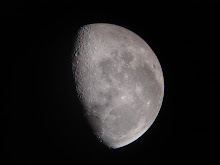
The crater Ulugh Beigh on the Moon was named after him by the German astronomer Johann Heinrich von Mädler in his 1830 map of the Moon.


Saturday, March 21, 2009

March 21: Antonia Maury


Antonia Caetana de Paiva Pereira Maury
March 21, 1866 – January 8, 1952


Antonia Maury was an American astronomer who worked at Harvard College Observatory (HCO) along with Williamina Fleming and Annie Jump Cannon. She published an important early catalog of stellar spectra.

Maury was the granddaughter of John William Draper and niece of Henry Draper, both pioneering astronomers.
In 1840 her grandfather had made the first daguerreotype image of the moon, while in 1872 her uncle made the first photograph of a star, Vega, showing absorption lines—dark lines in the star's spectrum caused by the absorption of hot gases as they cool. On her father's side, Commander Matthew Fontaine Maury, the first director of the United States Naval Observatory (1842-61), was an astronomer and oceanographer, known as the "Pathfinder of the Seas".

Antonia Maury was educated at Vassar College, graduating in 1887. She was employed at Harvard College Observatory (HCO), where she observed stellar spectra and published a catalog of classifications in 1897 (Spectra of Bright Stars Photographed with the 11-inch Draper Telescope as part of the Henry Draper Memorial, Annals of Harvard College Observatory, vol. 28, pp.1-128).


Antonia Maury's uncle, Henry Draper, had devoted great time and effort to the study of stellar spectra, and he was in the process of cataloging over 100 stars through spectral analysis when he died, in 1882, at the age of 45. Three years later Edward Charles Pickering and Williamina Fleming had begun the monumental task at the Harvard College Observatory of cataloging, according to a color index they had devised, the prismatic spectra of some 10,000 stars.

In 1886, Maury's aunt, Anna Draper, who had worked with her husband on his catalog, had established the Henry Draper Memorial to fund it. Antonia Maury was the "computer" responsible for computing and cataloging stellar spectra for bright stars in the northern hemisphere, which entailed analyzing thousands of spectral photographs for minute differences. The average pay for the "computers"—sometimes referred to as "Pickering's Harem"—was 25 cents an hour, less than half the amount paid to men.

The director of HCO at the time, Pickering, disagreed with Maury’s system of classification and explanation of differing line widths, prompting her to leave HCO. However, Ejnar Hertzsprung realized the value of her classifications and used them in his system of identifying giant and dwarf stars.

Maury's efforts to refine the spectral categories were not appreciated. Doing original theoretical work not only conflicted with Pickering's expectations for her as a "computer," but they also slowed down the work on the Draper Catalogue. Her detailed measurements of width and sharpness put him behind schedule. "She was one of the most original thinkers of all the women Pickering employed", Hoffleit notes, "but instead of encouraging her attempts at interpreting observations, he was only irritated by her independence and departure from assigned and expected routine." Frustrated by this constriction of her work, Antonia Maury left Harvard in 1891 to teach in the Gilman School in Cambridge.


In 1908, Maury returned to HCO where she remained for many years. Her most famous work there was the spectroscopic analysis of the binary star Beta Lyrae, published in 1933 (The Spectral Changes of Beta Lyrae, Annals of Harvard College Observatory, vol. 84, no. 8).

Antonia Maury, surveying the vastness of the known universe, once observed
"but the human brain is greater yet, because it can comprehend it all."

In 1943, Antonia Maury was awarded the Annie Jump Cannon Award in Astronomy by the American Astronomical Society. The lunar crater Maury is co-named after her and
Matthew Fontaine Maury.


Friday, March 20, 2009

March 20: David Lasser


David Lasser
March 20, 1902 – May 5, 1996

David Lasser was one of the most influential figures of early science fiction writing, working closely with Hugo Gernsback.

In the 1920s, Lasser moved to New York, where he pursued his interest in the nascent fields of rocketry and science fiction. On 4 April 1930, he became president of the American Interplanetary Society (renamed the American Rocket Society in 1934), which he founded with Gawain and Leatrice Pendray, both regular contributors to Science Wonder Stories.

Lasser used his expertise in science, engineering, and rocketry to write The Conquest of Space (1931). It was the first non-fiction English-language book to deal with spaceflight and detailed how man could one day travel into outer space. The book was an inspiration to a generation of science-fiction writers, including Arthur C. Clarke. From 1929 to 1933, Lasser worked as the Managing Editor of Hugo Gernsback’s Stellar Publishing Corporation. He was responsible for editing all the issues of Science Wonder Stories and Wonder Stories Quarterly, as well as identifying and retaining promising writers. Lasser also edited Gernsback’s Wonder Stories from June 1930 to October 1933 and remained involved in the science fiction realm throughout his life.

The American Institute of Aeronautics and Astronautics (AIAA) currently awards the Gardner-Lasser Aerospace History Literature Award to the best original non-fiction work dealing with aeronautics or aeronautical history. The award is named to honor David Lasser and Lester Gardner.


Thursday, March 19, 2009

March 19: Franz von Gruithuisen


Baron Franz von Paula Gruithuisen
March 19, 1774 – 1852

Franz von Gruithuisen was a Bavarian physician and astronomer. He taught medical students before becoming a professor of astronomy at the University of Munich in 1826.

During his period of medical studies and instruction, he was noted for his contributions to urology and lithotrity. He developed ideas on safer methods to remove bladder stones transurethrally, and his instruments served as models for subsequent devices.

Like others before and since his time, Gruithuisen believed that the Earth's moon was inhabitable. He made multiple observations of the lunar surface that supported his beliefs, including his announcement of the discovery of a city in the rough terrain to the north of Schröter crater he named the Wallwerk. This region contains a series of somewhat linear ridges that have a fishbone-like pattern, and, with the small refracting telescope he was using, could be perceived as resembling buildings complete with streets. He published his observations in 1824, but they were greeted with much skepticism by other astronomers of the time. His claims were readily refuted using more powerful instruments.

He is also noted for the discovery of bright caps on the cusps of the crescent Venus, for being the first to suggest that craters on the Moon were caused by meteorite impacts and for his prolific rate of publication. He proposed that jungles on Venus grew more rapidly than in Brazil due to the proximity of the planet to the Sun, and that as a consequence the inhabitants celebrated fire festivals— the cause of the bright caps on Venus.

The crater Gruithuisen on the Moon is named in his honor.


Wednesday, March 18, 2009

March 18: Philippe de La Hire


Philippe de La Hire
March 18, 1640 — April 21, 1718

Philippe de La Hire was a French mathematician and astronomer. According to Bernard le Bovier de Fontenelle he was an "academy unto himself".

He was born in Paris, the son of Laurent de La Hire, a distinguished artist. In 1660, he moved to Rome to study painting. Upon his return to Paris, he began to study science and showed an aptitude for mathematics. He became a member of French Academy of Sciences in 1678, and subsequently became active as an astronomer, calculating tables of the movements of the Sun, Moon, and planets.

From 1679–1682 he made several observations and measurements of the French coastline, and in 1683 aided in mapping France by extending the Paris meridian to the north. In 1683 La Hire assumed the chair of mathematics at the Collège Royale. From 1687 onwards he taught at the Académie d’architecture.

La Hire wrote on graphical methods, 1673; on conic sections, 1685; a treatise on epicycloids, 1694; one on roulettes, 1702; and, lastly, another on conchoids, 1708. His works on conic sections and epicycloids were founded on the teaching of Desargues, of whom he was his favourite pupil. He also translated the essay of Manuel Moschopulus on magic squares, and collected many of the theorems on them which were previously known; this was published in 1705. He also published a set of astronomical tables in 1702. La Hire's work also extended to descriptive zoology, the study of respiration, and physiological optics.

Two of his sons were also notable for their scientific achievements: Gabriel-Philippe de La Hire (1677-1719), mathematician, and Jean-Nicolas de La Hire (1685-1727), botanist.

The mountain Mons La Hire on the Moon is named in his honor.


Tuesday, March 17, 2009

March 17: Thomas Maclear


Sir Thomas Maclear
March 17, 1794 – July 14, 1879

Thomas Maclear was an Irish-born South African astronomer who became Her Majesty's astronomer at the Cape of Good Hope.

Dr. Maclear had a keen interest in amateur astronomy, and would begin a long association with the Royal Astronomical Society, to which he would be named a Fellow. In 1833, when the post became vacant, he was named as Royal Astronomer at the Cape of Good Hope, and arrived there aboard the Tam O'Shanter with his wife and 5 daughters, to take up his new duties in 1834. He worked with John Herschel until 1834, performing a survey of the southern sky, and continued to perform important astronomical observations over several more decades. The Maclears and Herschels formed a close friendship, the wives drawn together by the unusual occupations of their husbands and the raising of their large families. Mary Maclear, like Margret Herschel, was a noted beauty and intelligent, though suffering from extreme deafness.

In 1750 Abbe Nicolas Louis de Lacaille had measured a triangulation arc northwards from Cape Town, to determine the shape of the earth and found that the curvature of the earth was less in southern latitudes than at corresponding northern ones. Sir George Everest visited the Cape in 1820 and visited the site of LaCailles measurements. From his experience in the Himalayas he believed that the presence of considerable mountain masses in the Cape could have caused false measurements to be made by LaCaille. Between 1841 and 1848 Maclear would be occupied in performing a geodesic survey for the purpose of recalculating the dimensions and shape of the Earth. He became close friends with David Livingstone, and they shared a common interest in the exploration of Africa. He performed many other useful scientific activities, including collecting meteorological, magnetic and tide data.

In 1861 his wife died. Two years later he was granted a pension, but did not retire from the observatory until 1870. He lived thereafter at Grey Villa, Mowbray. By 1876 he had lost his sight, and he died three years later in Cape Town, South Africa. He is buried next to his wife on the grounds of the Royal Observatory.

The Lunar crater Maclear is named in his honor.


Monday, March 16, 2009

March 16: Caroline Lucretia Herschel

Caroline Lucretia Herschel
March 16, 1750 – January 9, 1848

Caroline Herschel was a German-born English astronomer, the sister of astronomer Sir William Herschel with whom she worked throughout both of their careers. Her most significant contribution to astronomy was the discovery of several comets and in particular the periodic comet 35P/Herschel-Rigollet, which bears her name.

William's interest in astronomy started as a hobby to pass time at night. He took to retiring to bed as soon as he arrived home, taking "a bason of milk" and an astronomy book for company. At breakfast the next day he would give an impromptu lecture on what he had learned the night before. Caroline became as interested as William, stating that she was "much hindered in my practice by my help being continually wanted in the execution of the various astronomical contrivances." William became known for his work on high performance telescopes, and Caroline found herself supporting his efforts.

William's telescopes gained the attention of many in the field. When comparing observations with the Astronomer Royal, Nevil Maskelyne, William's telescope proved far superior. In March 1781 he made his first observation of what would eventually prove to be the planet Uranus. In 1782, William accepted the office of King's Astronomer to George III and moved to Datchet and subsequently to Observatory House near Slough, Berkshire. The new job proved to be a mixed blessing; although it left him with ample free time to continue his astronomical observations, it also meant a reduction in income and being called upon by the king for entertainment at any time. During this time William perfected his telescope making, building a series of ever larger devices that ultimately ended with his famous 40-foot focal length instrument. Caroline was his constant assistant in his observations, also performing the laborious calculations with which they were connected. During one such observation run on the large telescope in 1783, Caroline became caught on an iron hook and when she was helped off "...they could not lift me without leaving nearly 2 ouches of my flesh behind."

In 1778 William married a rich widow. Although his new wife made every effort to stay on friendly terms with Caroline it seems her life was considerably upset. Through this period she continued her observations on her own, and made many of her discoveries. She later reconciled with the couple, and took great delight in her new nephew, John Herschel.

During her leisure hours she occupied herself with sweeping the heavens with a 27-inch focal length Newtonian telescope and by this means detected a number of astronomical objects during the years 1783 - 87, including most notably an independent discovery of M110 (NGC 205), the second companion of the Andromeda Galaxy. During 1786 - 97 she also discovered eight comets, her first comet being discovered on August 1, 1786. She had unquestioned priority on five of the comets and had rediscovered Comet Encke in 1795. The following year she was granted an annual salary of £50 by George III for her work as William's assistant.

In 1797 William's observations had shown that there were a great many discrepancies in the star catalogue published by John Flamsteed, which was difficult to use due to its having been published as two volumes, the catalogue proper and a volume of original observations. William realised that he needed a proper cross-index in order to properly explore these differences but was reluctant to devote time to it at the expense of his more interesting astronomical activities. He therefore recommended to Caroline that she undertake the task. The resulting Catalogue of Stars was published by the Royal Society in 1798 and contained an index of every observation of every star made by Flamsteed, a list of errata, and a list of more than 560 stars that had not been included.

Caroline returned to Hanover in 1822 following her brother's death, but did not abandon her astronomical studies, continuing to verify and confirm William's findings and producing a catalogue of nebulae to assist John in his work.

In 1828 the Royal Astronomical Society presented her with their Gold Medal for this work - no woman would be awarded it again until Vera Rubin in 1996.

In 1835, along with Mary Somerville, she was elected to honorary membership of the Royal Astronomical Society; they were the first honorary women members. In 1838 she was also elected as a member of the Royal Irish Academy. In 1846 at the age of 96, she was awarded the Gold Medal for Science by the King of Prussia.


Sunday, March 15, 2009

March 15: Nicolas Louis de Lacaille


Abbé Nicolas Louis de Lacaille
March 15, 1713 – March 21, 1762

Abbé Nicolas Louis de Lacaille was a French astronomer. He is noted for his catalogue of nearly 10,000 southern stars, including 42 nebulous objects. This catalogue, called Coelum Australe Stelliferum, was published posthumously in 1763. It introduced 14 new constellations which have since become standard. He also calculated a table of eclipses for 1,800 years.

In honor of his contribution to the study of the southern hemisphere sky, a 60-cm telescope at Reunion Island will be named La-Caille telescope.

Born at Rumigny, in the Ardennes, he was left destitute by the death of his father, who held a post in the household of the duchess of Vendôme. Therefore, his theological studies at the College de Lisieux in Paris were undertaken at the expense of the duke of Bourbon.

After he had taken deacon's orders, however, he concentrated on science, and, through the patronage of Jacques Cassini, obtained employment, first in surveying the coast from Nantes to Bayonne, then, in 1739, in remeasuring the French arc of the meridian, for which he is honored with a pyramid at Juvisy-sur-Orge. The success of this difficult operation, which occupied two years, and achieved the correction of the anomalous result published by J. Cassini in 1718, was mainly due to Lacaille's industry and skill. He was rewarded by admission to the Academy and the appointment of mathematical professor in Mazarin college, where he worked in a small observatory fitted for his use.

His desire to observe the southern heavens led him to propose, in 1750, an astronomical expedition to the Cape of Good Hope. This was officially sanctioned by Roland-Michel Barrin de La Galissonière. Among its results were determinations of the lunar and of the solar parallax (Mars serving as an intermediary), the first measurement of a South African arc of the meridian, and the observation of 10,000 southern stars. 

Lalande said of him that, during a comparatively short life, he had made more observations and calculations than all the astronomers of his time put together. The quality of his work rivalled its quantity, while the disinterestedness and rectitude of his moral character earned him universal respect.

The crater La Caille on the Moon is named in his honor. Asteroid 9135 Lacaille (AKA 7609 P-L and 1994 EK6), discovered on October 17, 1960 by Cornelis Johannes van Houten, Ingrid van Houten-Groeneveld, and Tom Gehrels at Palomar Observatory, was also named after him.


Saturday, March 14, 2009

March 14: Albert Einstein


Albert Einstein
March 14, 1879 – April 18,1955

Albert Einstein was a German-born theoretical physicist. He is best known for his theory of relativity and specifically mass–energy equivalence, expressed by the equation E = mc2. Einstein received the 1921 Nobel Prize in Physics "for his services to Theoretical Physics, and especially for his discovery of the law of the photoelectric effect."

Einstein's many contributions to physics include:
  • Special theory of relativity, which reconciled mechanics with electromagnetism
  • General theory of relativity, a new theory of gravitation which added the principle of equivalence to the principle of relativity
  • Founding of relativistic cosmology with a cosmological constant
  • The first post-Newtonian expansions for the perihelion advance of planet Mercury and frame-dragging
  • The deflection of light by gravity and gravitational lensing
  • An explanation for capillary action
  • The first fluctuation dissipation theorem which explained the Brownian movement of molecules
  • The photon theory and wave-particle duality from the thermodynamic properties of light
  • The quantum theory of atomic motion in solids
  • Zero point energy
  • The semiclassical version of the Schrodinger equation
  • Relations for atomic transition probabilities which predicted stimulated emission
  • The quantum theory of a monatomic gas which predicted Bose-Einstein condensation
  • The EPR paradox
  • A program for a unified field theory by the geometrization of physics.

Einstein published over 300 scientific works and over 150 non-scientific works. In 1999 Time magazine named him the "Person of the Century", and according to Einstein biographer Don Howard, "to the scientifically literate and the public at large, Einstein is synonymous with genius."

In 1999, Albert Einstein was named "Person of the Century" by Time magazine, a Gallup poll recorded him as the fourth most admired person of the 20th century and according to The 100: A Ranking of the Most Influential Persons in History, Einstein is "the greatest scientist of the twentieth century and one of the supreme intellects of all time."

A partial list of his memorials:
  • The International Union of Pure and Applied Physics named 2005 the "World Year of Physics" in commemoration of the 100th anniversary of the publication of the Annus Mirabilis Papers.
  • The Albert Einstein Institute
  • The Albert Einstein Memorial by Robert Berks
  • A unit used in photochemistry, the einstein
  • The chemical element 99, einsteinium
  • The asteroid 2001 Einstein
  • The Albert Einstein Award
  • The Albert Einstein Peace Prize

In the period before World War II, Albert Einstein was so well-known in America that he would be stopped on the street by people wanting him to explain "that theory". He finally figured out a way to handle the incessant inquiries. He told his inquirers "Pardon me, sorry! Always I am mistaken for Professor Einstein."

Albert Einstein has been the subject of or inspiration for many novels, films, and plays. Einstein is a favorite model for depictions of mad scientists and absent-minded professors; his expressive face and distinctive hairstyle have been widely copied and exaggerated. Time magazine's Frederic Golden wrote that Einstein was "a cartoonist's dream come true."

Einstein's association with great intelligence has made the name Einstein synonymous with genius, often used in ironic expressions such as "Nice job, Einstein!".


Friday, March 13, 2009

March 13: Percival Lowell


Percival Lawrence Lowell
March 13, 1855 – November 12, 1916

Percival Lowell was a businessman, author, mathematician, and astronomer who fueled speculation that there were canals on Mars, founded the Lowell Observatory in Flagstaff, Arizona, and formed the beginning of the effort that led to the discovery of Pluto 14 years after his death. The choice of the name Pluto and its symbol were partly influenced by his initials PL.

Beginning in the winter of 1893-94, using his wealth and influence, Lowell dedicated himself to the study of astronomy, founding the observatory which bears his name. For the last 23 years of his life astronomy, the Lowell Observatory, and his and others' work at his observatory were the focal points of his life. He lived to be 61 years of age.


Lowell became determined to study Mars and astronomy as a full-time career after reading Camille Flammarion's La planète Mars. He was particularly interested in the canals of Mars, as drawn by Italian astronomer Giovanni Schiaparelli, who was director of the Milan Observatory. In 1894 Lowell chose Flagstaff, Arizona Territory as the home of his new observatory. At an altitude of over 2,100 meters (7,000 feet), with few cloudy nights, and far from city lights, Flagstaff was an excellent site for astronomical observations. This marked the first time an observatory had been deliberately located in a remote, elevated place for optimal seeing.

For the next fifteen years he studied Mars extensively, and made intricate drawings of the surface markings as he perceived them. Lowell published his views in three books: Mars (1895), Mars and Its Canals (1906), and Mars As the Abode of Life (1908). With these writings, Lowell more than anyone else popularized the long-held belief that these markings showed that Mars sustained intelligent life forms. While this idea excited the public, the astronomical community was skeptical. Many astronomers could not see these markings, and few believed that they were as extensive as Lowell claimed. As a result, Lowell and his observatory were largely ostracized. Although the consensus was that some actual features did exist which would account for these markings.

In 1909 the sixty-inch Mount Wilson Observatory telescope in Southern California allowed closer observation of the structures Lowell had interpreted as canals, and revealed irregular geological features, probably the result of natural erosion.
The existence of canal-like features would not be definitively disproved until Mariner 4 took the first close-up pictures of Mars in 1965, and Mariner 9 orbited and mapped the planet in 1972. Today, the surface markings taken to be canals are regarded as an optical illusion.

Lowell's greatest contribution to planetary studies came during the last decade of his life, which he devoted to the search for Planet X, a hypothetical planet beyond Neptune. Lowell believed that the planets Uranus and Neptune were displaced from their predicted positions by the gravity of the unseen Planet X. Although Lowell's searches from 1905 to 1916 proved unsuccessful, the search continued after his death at Flagstaff in 1916.

In 1930, Clyde Tombaugh, a young astronomer recently hired by the Lowell Observatory, discovered the planet, named Pluto. Partly in recognition of Lowell's efforts, a stylized P-L monogram (the first two letters of the new planet's name and also Lowell's initials), was chosen as Pluto's astronomical symbol.

However, it would subsequently emerge that the Planet X theory was mistaken.
Pluto's mass could not be determined until 1978, when a satellite was discovered. This confirmed what had been increasingly suspected: Pluto's gravitational influence on Uranus and Neptune is negligible, certainly not nearly enough to account for the discrepancies in their orbits. In 2006, after Clyde Tombaugh's death, Pluto was reclassified as a dwarf planet by the International Astronomical Union.

In addition, it is now known that the discrepancies between the predicted and observed positions of Uranus and Neptune were not caused by the gravity of an unknown planet. Rather, they were due to an erroneous value for the mass of Neptune. Voyager 2's 1989 encounter with Neptune yielded a more precise value of its mass, and the discrepancies disappear when using this value.

Although Lowell's theories of the Martian canals and of Planet X are now discredited, his practice of building observatories at the position where they would best function has been adopted as a principle. He also established the program and setting which made the discovery of Pluto by Clyde Tombaugh possible.


The Lunar crater Lowell and a crater on Mars have been named in his honor.


Thursday, March 12, 2009

March 12: Simon Newcomb


Simon Newcomb
March 12, 1835 – July 11, 1909

Simon Newcomb was a Canadian-American astronomer and mathematician. Though he had little conventional schooling, he made important contributions to timekeeping as well as writing on economics, statistics and authoring a science fiction novel.

Newcomb studied mathematics and physics privately and supported himself with some school-teaching before becoming a human computer (a functionary in charge of calculations) at the Nautical Almanac Office in Cambridge, Massachusetts in 1857. At around the same time, he enrolled at the Lawrence Scientific School of Harvard University, graduating BS in 1858.

In the prelude to the American Civil War, many US Navy staff of Confederate sympathies left the service and, in 1861, Newcomb took advantage of one of the ensuing vacancies to become professor of mathematics and astronomer at the United States Naval Observatory, Washington DC. Newcomb set to work on the measurement of the position of the planets as an aid to navigation, becoming increasingly interested in theories of planetary motion.

By the time Newcomb visited Paris, France in 1870, he was already aware that the table of lunar positions calculated by Peter Andreas Hansen was in error. While in Paris, he realised that, in addition to the data from 1750 to 1838 that Hansen had used, there was further data stretching as far back as 1672. Newcomb was able to use the "new" data to revise Hansen's tables.

He was offered the post of director of the Harvard College Observatory in 1875 but declined, having by now settled that his interests lay in mathematics rather than observation.

In 1877 he became director of the Nautical Almanac Office where, ably assisted by George William Hill, he embarked on a program of recalculation of all the major astronomical constants. Despite fulfilling a further demanding role as professor of mathematics and astronomy at Johns Hopkins University from 1884, he conceived with A. M. W. Downing a plan to resolve much international confusion on the subject. By the time he attended a standardisation conference in Paris, France in May 1896, the international consensus was that all ephemerides should be based on Newcomb's calculations. A further conference as late as 1950 confirmed Newcomb's constants as the international standard.

In 1878, Newcomb had started planning for a new and precise measurement of the speed of light that was needed to account for exact values of many astronomical constants. He had already started developing a refinement of the method of Léon Foucault when he received a letter from the young naval officer and physicist Albert Abraham Michelson who was also planning such a measurement. Thus began a long collaboration and friendship. In 1880, Michelson assisted at Newcomb's initial measurement with instruments located at Fort Myer and the United States Naval Observatory, then situated on the Potomac River. However, Michelson had left to start his own project by the time of the second set of measurements between the observatory and the Washington Monument. Though Michelson published his first measurement in 1880, Newcomb's measurement was substantially different. In 1883, Michelson revised his measurement to a value closer to Newcomb's.

Awards and honours


Wednesday, March 11, 2009

March 11: Urbain Le Verrier


Urbain Jean Joseph Le Verrier
March 11, 1811 – September 23, 1877

Urbain Le Verrier was a French mathematician who specialized in celestial mechanics and is best known for his part in the discovery of Neptune.

Le Verrier studied at the Ecole Polytechnique. Following a brief period studying chemistry under Gay-Lussac, Le Verrier switched to astronomy, particularly celestial mechanics. He accepted a job at the Paris Observatory, where he spent most of his professional life, and eventually became that institution's Director.

Le Verrier's most famous achievement is his prediction of the existence of the then unknown planet Neptune, using only mathematics and astronomical observations of the known planet Uranus. Encouraged by physicist Arago, Director of the Paris Observatory, Le Verrier was intensely engaged for months in complex calculations to explain small but systematic discrepancies between Uranus's observed orbit and the one predicted from the laws of gravity of Newton. 

At the same time, but unknown to Le Verrier, similar calculations were made by John Couch Adams in England. Le Verrier announced his final predicted position for Uranus's unseen perturbing planet publicly to the French Academy on August 31, 1846, two days before Adams's final solution, which turned out to be 12° off the mark, was privately mailed to the Royal Greenwich Observatory. Le Verrier transmitted his own prediction by September 18 letter to Johann Galle of the Berlin Observatory. The letter arrived five days later, and the planet was found with the Berlin Fraunhofer refractor that same evening, September 23, 1846 by Galle and Heinrich d'Arrest within 1° of the predicted location near the boundary between Capricorn and Aquarius.

There was, and to an extent still is, controversy over the apportionment of credit for the discovery. There is no ambiguity to the discovery claims of Le Verrier, Galle, and d'Arrest. Adams's work was begun earlier than Le Verrier's but was finished later and was unrelated to the actual discovery. Not even the briefest account of Adams's predicted orbital elements was published until more than a month after Berlin's visual confirmation. But Adams himself made full public acknowledgement of Le Verrier's priority and credit (not forgetting to mention the role of Galle) when he gave his paper to the Royal Astronomical Society in November 1846:

I mention these dates merely to show that my results were arrived at independently, and previously to the publication of those of M. Le Verrier, and not with the intention of interfering with his just claims to the honours of the discovery ; for there is no doubt that his researches were first published to the world, and led to the actual discovery of the planet by Dr. Galle, so that the facts stated above cannot detract, in the slightest degree, from the credit due to M. Le Verrier.
– Adams (1846)


Galvanized by his success with Neptune, Le Verrier proceeded to interpret variations in the orbit of Mercury as being due to an unknown planet, tentatively named Vulcan. This triggered a wave of false detections, which lasted until 1915, when Einstein explained Mercury's anomalous motion with his theory of general relativity.

The last quarter century of Le Verrier's life was engaged in establishing the orbits of all eight planets, a project which he only narrowly lived to see completed and printed.

Honors


Tuesday, March 10, 2009

March 10: MRO Attained Martian Orbit


MRO attained Martian orbit on March 10, 2006

NASA's Mars Reconnaissance Orbiter (MRO) is a multipurpose spacecraft designed to conduct reconnaissance and exploration of Mars from orbit.

When MRO entered orbit there were five other spacecraft in orbit of or on Mars: Mars Global Surveyor, Mars Express, Mars Odyssey, and two Mars Exploration Rovers; a then record for most spacecraft operational in Mars vicinity. The $720 million USD spacecraft was built by Lockheed Martin under the supervision of the Jet Propulsion Laboratory. It was launched August 12, 2005, and attained Martian orbit on March 10, 2006. In November 2006, after five months of aerobraking, it entered its final science orbit and began its primary science phase.

MRO is modeled after NASA's highly successful Mars Global Surveyor to conduct surveillance of Mars from orbit. Early specifications of the satellite included a large camera to take high resolution pictures of Mars. In this regard, Jim Garvin, the Mars exploration program scientist for NASA, proclaimed that MRO would be a "microscope in orbit". The satellite was also to include a visible-near-infrared spectrograph.

MRO contains a host of scientific instruments such as cameras, spectrometers, and radar, which are used to analyze the landforms, stratigraphy, minerals, and ice of Mars. It paves the way for future spacecraft by monitoring daily weather and surface conditions, studying potential landing sites, and hosting a new telecommunications system. MRO's telecommunications system will transfer more data back to Earth than all previous interplanetary missions combined, and MRO will serve as a highly capable relay satellite for future missions.

MRO is using its on-board scientific equipment to study the Martian climate, weather, atmosphere, and geology, and to search for signs of water in the polar caps and underground. In addition, MRO is looking for the remains of the previously lost Mars Polar Lander and Beagle 2 spacecraft, and serves as the first step in setting up an internet protocol network for the planets in our solar system. After its main science operations are completed, the probe's extended mission is to be the communication and navigation system for landers and rover probes.


Monday, March 9, 2009

March 9: David Fabricius


David Fabricius
March 9, 1564 - May 7, 1617

David Fabricius was a German theologian who made two major discoveries in the early days of telescopic astronomy, jointly with his eldest son, Johannes Fabricius (1587-1615).

David Fabricius (Latinization of his proper name David Faber or David Goldschmidt) served as pastor for small towns near his birthplace in Esens, Frisia (now northwest Germany and northeast Netherlands), at Resterhafe near Dornum in 1584 and at Osteel in 1603. As was common for churchmen of the day, he dabbled in science: his particular interest was astronomy.

Fabricius discovered the first known periodic variable star (as opposed to cataclysmic variables, such as novas and supernovas), Mira, in August of 1596. At first he believed it to be "just" another nova, as the whole concept of a recurring variable did not exist at the time. When he saw Mira brighten again in 1609, however, it became clear that a new kind of object had been discovered in the sky.

Two years later, his son Johannes Fabricius returned from university in the Netherlands with telescopes that they turned on the Sun. Despite the difficulties of observing the sun directly, they noted the existence of sunspots, the first confirmed instance of their observation (though unclear statements in East Asian annals suggest that Chinese astronomers may have discovered them with the naked eye previously, and Fabricius may have noticed them himself without a telescope a few years before). 

The pair soon invented camera obscura telescopy so as to save their eyes and get a better view of the solar disk, and observed that the spots moved. They would appear on the eastern edge of the disk, steadily move to the western edge, disappear, then reappear at the east again after the passage of the same amount of time that it had taken for it to cross the disk in the first place.

This suggested that the Sun rotated on its axis, which had been postulated before but never backed up with evidence. Johannes published Maculis in Sole Observatis, et Apparente earum cum Sole Conversione Narratio ("Narration on Spots Observed on the Sun and their Apparent Rotation with the Sun") in June of 1611. Unfortunately, the book remained obscure and was eclipsed (so to speak) by the independent discoveries of and publications about sunspots by Christoph Scheiner in January 1612 and Galileo Galilei in March 1612.

Besides these two discoveries, little else is known about David Fabricius except his unusual manner of death: after denouncing a local goose thief from the pulpit, the accused man struck him in the head with a shovel and killed him.

Copies of a map he made of Frisia in 1589 are also still extant. He is also name-checked in Jules Verne's From the Earth to the Moon as someone who claimed to have seen lunar inhabitants through his telescope, though that particular fact is merely part of Verne's fiction. In 1895 a monument was erected to his memory in the churchyard at Osteel where he was pastor from 1603 until 1617. The Lunar crater Fabricius is named in his honor. 


Sunday, March 8, 2009

March 8: Alvan Clark


Alvan Clark
March 8, 1804 – August 19, 1887

Alvan Clark, born in Ashfield, Massachusetts, the descendant of a Cape Cod whaling family of English ancestry, was an American astronomer and telescope maker. 

He was a portrait painter and engraver, but at the age of 40 become involved in telescope making. Using glass blanks made by Chance Brothers of Birmingham and Feil-Mantois of Paris, his firm Alvan Clark & Sons ground lenses for refracting telescopes, including the largest in the world at the time: 


He was the first person in the United States to make achromatic lenses, and the most important modern telescopes have been constructed at his factory in Cambridge-port. Mr. Clark invented numerous improvements in telescopes and their manufacture, including the double eye-piece, an ingenious method of measuring small celestial arcs. A list of discoveries made by him with telescopes of his own manufacture is given in the "Proceedings of the Royal Astronomical Society" (London, vol. 17, No. 9).

Mr. Clark accompanied the total-eclipse expedition to Jerez, Spain, in 1870, and also the similar expedition to Wyoming in 1878. As an independent observer he has discovered fourteen intricate double stars, including the companion to Sirius, for which the Lalande gold medal was awarded him by the French academy of sciences in 1862. He has also made numerous inventions connected with the manufacture of refracting telescopes. 

One of Clark's sons, Alvan Graham Clark, discovered the dim companion of Sirius. His other son was George Bassett Clark; both sons were partners in the firm.

The Lunar crater Clark and on Mars are named in his honor.


Saturday, March 7, 2009

March 7: John Herschel


Sir John Frederick William Herschel
March 7, 1792 – May 11, 1871

Sir John Frederick William Herschel, 1st Baronet KH, FRS, was an English mathematician, astronomer, chemist, and experimental photographer/inventor, who in some years also did valuable botanical work. He was the son of astronomer Sir William Herschel and the father of 12 children.

Herschel originated the use of the Julian day system in astronomy. He named seven moons of Saturn and four moons of Uranus. He made many contributions to the science of photography, and investigated colour blindness and the chemical power of ultraviolet rays.

Herschel studied at Eton College and St John's College, Cambridge. It was during his time as an undergraduate that he became friends with Charles Babbage and George Peacock. He took up astronomy in 1816, building a reflecting telescope with a mirror 18 inches (460 mm) in diameter and with a 20-foot (6.1 m) focal length. Between 1821 and 1823 he re-examined, with James South, the double stars catalogued by his father. For this work he was presented in 1826 with the Gold Medal of the Royal Astronomical Society (which he won again in 1836), and with the Lalande Medal of the French Institute in 1825, while in 1821 the Royal Society bestowed upon him the Copley Medal for his mathematical contributions to their Transactions. Herschel was made a Knight of the Royal Guelphic Order in 1831.

Declining an offer from the Duke of Sussex that they travel to South Africa on a Navy ship, Herschel and his wife paid ₤500 for passage on the 'S.S. Mountstuart Elphinstone', a ship of 611 tons, which departed from Portsmouth on 13 November 1833. The voyage to South Africa was made in order to catalogue the stars, nebulae, and other objects of the southern skies. This was to be a completion as well as extension of the survey of the northern heavens undertaken initially by his father William Herschel. He arrived in Cape Town on 15 January 1834 and set up a private 21 ft (6.4 m) telescope at Feldhausen at Wynberg. Amongst his other observations during this time was that of the return of Comet Halley. Herschel collaborated with Thomas Maclear, the Astronomer Royal at the Cape of Good Hope, and the two families became close friends.

Herschel wrote many papers and articles, including entries on meteorology, physical geography and the telescope for the eighth edition of the Encyclopædia Britannica. He also translated The Iliad of Homer.

He proposed a correction to the Gregorian calendar, making years that are multiples of 4,000 not leap years, thus reducing the average length of the calendar year from 365.2425 days to 365.24225. Although this is closer to the mean tropical year of 365.24219 days, his proposal has never been adopted because the Gregorian calendar is based on the mean time between vernal equinoxes (currently 365.2424 days).

In 1835, the New York Sun newspaper wrote a series of satiric articles that came to be known as the Great Moon Hoax, with statements falsely attributed to Herschel about his supposed discoveries of animals living on the Moon, including batlike winged humanoids.

Herschel Island (in the Arctic Ocean, north of the Yukon Territory), Mount Herschel (in Antarctica) and the crater J. Herschel on the Moon are named in his honor.


Friday, March 6, 2009

March 6: Joseph von Fraunhofer


Joseph von Fraunhofer
March 6, 1787 – June 7, 1826

Joseph von Fraunhofer was a German optician. He is known for the discovery of the dark absorption lines known as Fraunhofer lines in the Sun's spectrum, and for making excellent optical glass and achromatic telescope objectives.

Fraunhofer was born in Straubing, Bavaria. He became an orphan at the age of 11, and he started working as an apprentice to a harsh glassmaker named Philipp Anton Weichelsberger. In 1801 the workshop in which he was working collapsed and he was buried in the rubble. The rescue operation was led by Maximilian IV Joseph, Prince Elector of Bavaria (the future Maximilian I Joseph). The prince entered Fraunhofer's life, providing him with books and forcing his employer to allow the young Joseph Fraunhofer time to study.

After eight months of study, Fraunhofer went to work at the Optical Institute at Benediktbeuern, a secularised Benedictine monastery devoted to glass making. There he discovered how to make the world's finest optical glass and invented incredibly precise methods for measuring dispersion. In 1818 he became the director of the Optical Institute. Due to the fine optical instruments he had developed, Bavaria overtook England as the centre of the optics industry. Even the likes of Michael Faraday were unable to produce glass that could rival Fraunhofer's.

His illustrious career eventually earned him an honorary doctorate from the University of Erlangen in 1822. In 1824, he was awarded the order of merit, became a noble, and made an honorary citizen of Munich. Like many glassmakers of his era who were poisoned by heavy metal vapours, Fraunhofer died young, in 1826 at the age of 39. His most valuable glassmaking recipes are thought to have gone to the grave with him.

In 1814, Fraunhofer invented the spectroscope, and discovered 574 dark lines appearing in the solar spectrum. These were later shown to be atomic absorption lines, as explained by Kirchhoff and Bunsen in 1859. These lines are still called Fraunhofer lines in his honour.

He also invented the diffraction grating and in doing so transformed spectroscopy from a qualitative art to a quantitative science by demonstrating how one could measure the wavelength of light accurately. He found out that the spectra of Sirius and other first-magnitude stars differed from each other and from the sun, thus founding stellar spectroscopy.

Ultimately, however, his primary passion was still practical optics, once noting that
"In all my experiments I could, owing to lack of time, pay attention to only those matter which appeared to have a bearing upon practical optics."
In the early 1990s a firm that designed and built refracting telescopes was named in his honor Fraunhofer Systems Company since the telescopes were based on his design but now the company is part of Burbank Optical Company.

The Lunar crater Fraunhofer is named in his honor.