Thursday, January 15, 2009

January 15: Arthur Butler Phillips Mee


Arthur Butler Phillips Mee 
October 21, 1860 - January 15, 1926 

Arthur Mee was a Scottish-born newspaper journalist, editor and notable amateur astronomer. In 1892 he moved to Cardiff where he began working at the Western Mail, a regional newspaper. He continued to work at the same newspaper up until his death, writing a regular column and performing editorial work as an assistant.  

He was most noted for his efforts in support of amateur astronomy. In 1890 he was a founding member of the British Astronomical Association, and for a period of time was a Fellow of the Royal Astronomical Society. His observations focused on the Moon and Mars, including making detailed charts and drawings of the features. Two of his drawings appeared in La Planète Mars by Camille Flammarion. He was a regular contributor to various scientific and technical publications. In 1892 he became the first person to observe the shadow of the moon Titan during a transit of the planet Saturn. In 1893 he published the book Observational Astronomy. Two years later in 1895 he helped initiate foundation of the Astronomical Society of Wales, thereafter becoming the first president and editing the Society's journal.  

The crater Mee on the Moon is named in his honor.


Wednesday, January 14, 2009

January 14: Edmond Halley


Edmond Halley 
November 8, 1656 - January 14, 1742 

Edmond Halley was a British astronomer, geophysicist, mathematician, meteoroligist and physicist. 

One problem that attracted his attention was the proof of Kepler's laws of planetary motion. In August 1684 he went to Cambridge to discuss this with Isaac Newton, only to find that Newton had solved the problem but published nothing. Halley convinced him to write the Principia Mathematica Philosophiae Naturalis (1687), which was published at Halley's expense.

Edmond Halley is perhaps best known for Halley's Comet, which was the first comet to be recognized as periodic. Perceiving that the observed characteristics of a comet of 1682 were nearly the same as those of two comets which had appeared in 1531 (observed by Petrus Apianus) and 1607 (observed by Johannes Kepler), Halley concluded that all three comets were in fact the same object returning every 76 years. After a rough estimate of the perturbations the comet would sustain from the attraction of the planets, he predicted its return for 1758. Halley's prediction of the comet's return proved to be correct. Halley himself did not live to see the comet's return, having died in 1742.

The Moon crater Halley and a crater on Mars are named in his honor.


Tuesday, January 13, 2009

January 13: Olin Chaddock Wilson

Mt. Wilson Observatory, 100-inch Hooker Telescope


Olin Chaddock Wilson (January 13, 1909 – July 13, 1994) was an American astronomer best known for his work as a stellar spectroscopist. He studied astronomy and physics at the University of California, Berkeley and wrote his first scientific paper in 1932 on the subject of the speed of light. He received his PhD from the California Institute of Technology in 1934.

Wilson was a staff member of Mount Wilson Observatory for most of his research career where he studied stellar chromospheres. He was the first scientist to discover activity cycles, similar to the solar 11-year sunspot cycle, in other stars. 

In collaboration with Vainu Bappu he also showed that there was a correlation between the width of the Ca II lines in stellar spectra and the star's luminosity, the Wilson-Bappu Effect. The widths and shapes of the spectral lines told them about stellar rotation and atmospheric turbulence. The presence of sharp non-stellar absorption lines in the spectra told them about the amounts, temperatures, and random motions in the foreground interstellar matter. The presence of emission lines told them about chromospheric matter and excited matter around the stars.


Monday, January 12, 2009

January 12: Sergey Pavlovich Korolyov


January 12, 1907 – January 14, 1966

Korolyov (also spelled Korolev) was the head Soviet rocket engineer and designer during the Space Race between the United States and the Soviet Union in the 1950s and 1960s. He invented the R-7 rocket.

Korolyov's greatest strengths proved to be in design integration, organization and strategic planning. He was appointed to lead the Soviet space program and oversaw the early successes of the Sputnik and Vostok projects. By the time he died unexpectedly in 1966, his plans to compete with the United States to be the first nation to land a man on the Moon had begun to be implemented.

Before his death he was often referred to only as "Chief Designer", because his name and his pivotal role in the Soviet space program had been held to be a state secret by the Politburo. Only many years later he was publicly acknowledged as the lead man behind Soviet success in space.

The Lunar basin Korolev is named in his honor.


Sunday, January 11, 2009

January 11: William Tyler Olcott


William Tyler Olcott
January 11, 1873 – July 6, 1936

William Tyler Olcott was an American lawyer and amateur astronomer. In 1909, after attending a lecture by Edward Pickering, he developed an interest in observing variable stars. In 1911, he and professor Pickering founded the American Association of Variable Star Observers (AAVSO). Olcott also published several books to popularize the field of amateur astronomy. The Moon crater Olcott is named in his honor.
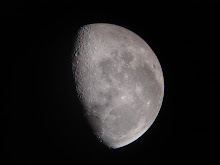


Saturday, January 10, 2009

January 10: Simon Marius


Simon Marius
January 10, 1573 – December 26, 1624


Simon Marius was a German astronomer. In 1614 Marius published his work Mundus Iovialis describing the planet Jupiter and its moons. Here he claimed to have discovered the planet's four major moons some days before Galileo. This led to a dispute with Galileo, who showed that Marius provided only one observation as early as Galileo's, and it matched Galileo's diagram for the same date, as published in 1610. 

It is considered possible that Marius discovered the moons independently, but at least some days later than Galileo; if so, he is the only person known to have observed the moons in the period before Galileo published his observations. Regardless of priority, the mythological names by which these satellites are known today (Io, Europa, Ganymede and Callisto) are those given them by Marius. The Moon crater Marius is named in his honor.

Simon Marius also observed the Andromeda "nebula", which had in fact already been known to Arab astronomers of the Middle Ages.


Friday, January 9, 2009

January 9: Caroline Herschel

Caroline Lucretia Herschel
March 16, 1750 – January 9, 1848

Caroline Lucretia Herschel was a German-born British astronomer. She is the sister of astronomer Sir William Herschel with whom she worked throughout both of their careers. Her most significant contribution to astronomy was the discovery of several comets and in particular the periodic comet 35P/Herschel-Rigollet, which bears her name. The Moon crater C. Herschel is named in her honor.


Thursday, January 8, 2009

January 8: Stephen Hawking


Stephen Hawking
b. January 8, 1942

Stephen William Hawking is a British theoretical physicist and was born on January 8, 1942.

Hawking is the Lucasian Professor of Mathematics at the University of Cambridge, a position once held by Issac Newton. He is known for his contributions to the fields of cosmology and quantum gravity, especially in the context of black holes, and his popular works in which he discusses his own theories and cosmology in general. These include the runaway popular science bestseller A Brief History of Time, which stayed on the British Sunday Times bestseller list for a record-breaking 237 weeks.

His key scientific works to date have included providing, with Roger Penrose, theorems regarding singularities in the framework of general relativity, and the theoretical prediction that black holes should emit radiation, which is today known as Hawking radiation.


January 8: Galileo Galilei


Galileo Galilei
February 15, 1564 – January 8, 1642

Galileo Galilei was an Italian astronomer who played a major role in the scientific revolution. His achievements include the first systematic studies of uniformly accelerated motion, improvements to the telescope and consequent astronomical observations, and support for Copernicanism. Galileo's empirical work was a significant break from the abstract Aristotelian approach of his time.

It is Galileo's first use of a telescope in 1609 that inspired the International Year of Astronomy in 2009.


Wednesday, January 7, 2009

January 7: Jovian Moons


NASA/JPL/DLR

January 7, 1610

Galileo Galilei observes the four largest moons of Jupiter for the first time. He named them and in turn the four are called the Galilean moons. Jupiter's 4 Galilean moons, in a composite image comparing their sizes and the size of Jupiter (Great Red Spot visible). From the top, they are Io,Europa, Ganymede and Callisto


Monday, January 5, 2009

January 5: Julio Garavito Armero


Julio Garavito Armero
January 5, 1865 – March 11, 1920

Julio Garavito Armero was a Colombian astronomer. Perhaps his most important work was on celestial mechanics, which turned into studies about lunar fluctuations and their influence on weather, floods, polar ice, and the Earth's orbital acceleration (this was corroborated later). He worked also in other areas such as optics (this work was left unfinished at his death), and economics, by which he helped the country recover from the rough civil war.

He opposed Albert Einstein's theory of relativity - probably he was opposing vague and contradictory opinions on this theory and its influence on classical physics. Despite this, Garavito was very conservative with his scientific knowledge. He has been compared to two great scientists of the 19th century: José Celestino Mutis and Francisco José de Caldas.

The lunar crater Garavito is named in his honor.


Saturday, January 3, 2009

January 3: First Light at Lick Observatory


The 36 inch (91.44-cm) refracting telescope on Mt. Hamilton saw first light on January 3, 1888. It was Earth's largest refracting telescope during the period from when it saw first light until the construction of Yerkes in 1897. 

The Lick Observatory is an astronomical observatory, owned and operated by the University of California. It is situated on the summit of Mount Hamilton, in the Diablo Range just east of San Jose, California, USA. The observatory is managed from the University of California, Santa Cruz, where its scientific staff moved in the mid-1960s.

 In April, 1888, the observatory became the first permanently occupied mountain-top observatory in the world. Edward Singleton Holden was the first director. The location provided excellent viewing performance due to lack of ambient light and pollution; additionally, the night air at the top of Mt. Hamilton is extremely calm, and the mountain peak is normally above the level of the low cloud cover that is often seen in the San Jose area. When low cloud cover is present below the peak, light pollution is cut to almost nothing.

The observatory was constructed between 1876 and 1887, from a bequest from James Lick.


Friday, January 2, 2009

January 2: First Photograph of the Moon

The American photographer John Adams Whipple took this daguerreotype of the Moon in 1851.

French pioneering photographer Louis Daguerre took the first photograph of the Moon in 1839. Neither Daguerre's microscopic nor his telescopic daguerreotypes survive, for on March 8, 1839, the Diorama—and with it Daguerre's laboratory—burned to the ground, destroying the inventor's written records and the bulk of his early experimental works.


Thursday, January 1, 2009

January 1: Hubble Discovers Galaxies

The American astronomer Edwin Hubble announces the discovery of galaxies outside the Milky Way. Using the Hooker Telescope, Hubble identified Cepheid variables (a kind of star; see also standard candle) in several objects, including the Andromeda Galaxy, which at that time were known as "nebulae" and had been assumed to lie within the Milky Way. His observations in 1922–1923 conclusively proved that these objects were much more distant than previously thought and were hence galaxies themselves, rather than constituents of the Milky Way. 


This discovery fundamentally changed the view of the universe.