
Yrjö Väisälä
September 6, 1891 – July 21, 1971
Yrjö Väisälä was a Finnish astronomer and physicist.
His main contributions were in the field of optics, but he was also very active in geodetics, astronomy and optical metrology. He even had an affectionate nickname of Wizard of Tuorla (Observatory/Optics laboratory), and there is a book with the same title in Finnish describing his works.
He developed several methods for measuring the quality of optical elements, as well as a lot of practical methods of manufacturing said elements. This allowed the construction of some of the earliest high-quality Schmidt cameras, in particular a "field-flattened" version known as Schmidt-Väisälä camera.
Contemporary to Bernhard Schmidt's design, but unpublished was also Prof. Yrjö Väisälä's identical design which he had mentioned in lecture notes in 1924 with a footnote: "problematic spherical focal surface".
Once he saw Schmidt's publication, he promptly went ahead and "solved" the field flattening problem by placing a doubly-convex lens slightly in front of the film holder (back in the 1930s, astronomical films were glass plates.) The resulting system is known as the Schmidt-Väisälä camera or sometimes as the Väisälä camera. (This solution is not perfect, as images of different colour end up at slightly different places.)
Prof. Väisälä made a small test unit of 7 mirrors in a mosaic on stiff background steel frame, however it proved to be impossible to stabilize as "just adjust and forget" structure, and next time anybody tried it, was with active controls on the Multiple Mirror Telescope.
The big Schmidt-Väisälä telescope he built was used at the University of Turku for searching asteroids and comets. His research group discovered 7 comets and 807 asteroids.
For this rather massive photographic survey work, Prof. Väisälä developed also a protocol of taking two exposures on same plate some 2–3 hours apart and offsetting those images slightly. Any dot-pairs that differed from background were moving, and deserved follow-up photos. This method halved the film consumption compared to method of "blink comparing", where plates get single exposures, and are compared by rapidly showing first and second exposures to human operator. (Blink-comparing was used to find e.g. Pluto.)
The University of Turku Astronomy department is known as VISPA: Väisälä Institute for Space Physics and Astronomy in honour of its founder.
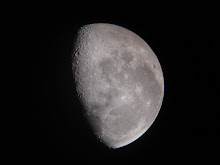
The Lunar crater Väisälä and the asteroid 1573 Väisälä are also named in his honor.
Yrjö Väisälä discovered 128 asteroids. He used to name them with the names of his personal friends that had birthdays. One of them was the professor Matti Palomaa, after whom an asteroid 1548 Palomaa was named. (For this reason the Palomar Mountain Observatory in California has never had an asteroid bearing its name – the rules for naming asteroids state that the names have to differ from each other with more than one letter.)



 Posts
Posts


