Showing posts with label astrophotography. Show all posts

Thursday, October 22, 2009

October 22: Albert Whitford


Albert Edward Whitford
October 22, 1905 – March 28, 2002

Albert Whitford was an American astronomer.

Whitford was born in Milton, Wisconsin and attended Milton College. He received his PhD from the University of Wisconsin–Madison. He served as the director of Washburn Observatory from 1948 to 1958. From 1958 to 1968 he was the director of Lick Observatory. Later he served on the faculties of both the University of California, Santa Cruz and the University of Wisconsin–Madison.

Whitford was a pioneer in the field of photoelectric photometry, greatly improving sensitivity. The Whitford reddening curve, quantifying the interstellar absorption of light, was important in the mapping of the distribution of stars in the Milky Way. He also studied the stars in galactic nuclear bulges.

In 1986 Whitford received the Henry Norris Russell Lectureship and in 1996 he was awarded the Bruce Medal.

The asteroid 2301 Whitford is named in his honor.


Friday, October 9, 2009

October 9: Karl Schwarzschild


Karl Schwarzschild
October 9, 1873 – May 11, 1916

Karl Schwarzschild was a German physicist. He is also the father of astrophysicist Martin Schwarzschild.

He is best known for providing the first exact solution to the Einstein field equations of general relativity, for the limited case of a single spherical non-rotating mass, which he accomplished in 1915, the same year that Einstein first introduced general relativity. The Schwarzschild solution, which makes use of Schwarzschild coordinates and the Schwarzschild metric, leads to the well-known Schwarzschild radius, which is the size of the event horizon of a non-rotating black hole.

Schwarzschild was born in Frankfurt am Main. He was something of a child prodigy, having a paper on celestial mechanics published when he was only sixteen. He studied at Strasbourg and Munich, obtaining his doctorate in 1896 for a work on Jules Henri Poincaré's theories.

From 1897, he worked as assistant at the Kuffner observatory in Vienna. From 1901 until 1909 he was a professor at the prestigious institute at Göttingen, where he had the opportunity to work with some significant figures including David Hilbert and Hermann Minkowski. Schwarzschild became the director of the observatory in Göttingen. He moved to a post at the Astrophysical Observatory in Potsdam in 1909.

From 1912, Schwarzschild was a member of the Prussian Academy of Sciences.

While serving on the front in Russia in 1915, he began to suffer from a rare and painful skin disease called pemphigus. Nevertheless, he managed to write three outstanding papers, two on relativity theory and one on quantum theory. His papers on relativity produced the first exact solutions to the Einstein field equations, and a minor modification of these results gives the well-known solution that now bears his name: the Schwarzschild metric.

Thousands of dissertations, articles, and books have since been devoted to the study of Schwarzschild's solutions to the Einstein field equations. However, although Schwarzschild's best known work lies in the area of general relativity, his research interests were extremely broad, including work in celestial mechanics, observational stellar photometry, quantum mechanics, instrumental astronomy, stellar structure, stellar statistics, Halley's comet, and spectroscopy.

Some of his particular achievements include measurements of variable stars, using photography, and the improvement of optical systems, through the perturbative investigation of geometrical aberrations.

The Lunar crater Schwarzschild, the Karl Schwarzschild Medal, the Karl Schwarzschild Observatory and more are named in his honor.


Thursday, October 1, 2009

October 1: Charles Edward Adams

Dr Charles Edward Adams (left) reading an anemometer.

Charles Edward Adams
October 1, 1870 - October 31, 1945

Charles Edward Adams was a University lecturer, surveyor, astronomer and seismologist. He was born at Lawrence, Otago, New Zealand.

Adams was awarded an MSc from the University of New Zealand in 1909 and by 1910 was chief computer at the head office of the Lands and Survey Department. The techniques he devised during this period for the prediction of tides were, with few modifications, employed in New Zealand until 1924. In 1911, while continuing to discharge his duties in the department, he was appointed astronomical observer at Wellington. Early the following year he became government astronomer. He spent 1915 as Martin Kellogg fellow at the Lick Observatory, California, then returned to a full-time position as government astronomer in the Internal Affairs Department. He was awarded a DSc from the University of New Zealand in 1915 for a thesis entitled Harmonic analysis of tidal observations and predictions of tides.

It was Adams's work in astronomy that identifies him as one of New Zealand's important scientists. He developed methods of computation of planetary ephemerides and cometary orbits and made observations of sunspots, variable stars, planets and auroras. In 1922 he accompanied the Lick Observatory solar eclipse expedition to Western Australia and in 1930 led an eclipse expedition to Niuafo'ou, in the Tongan group. He pioneered the use of cinematography for astronomical timing. The camera he devised for photographing the Moon against its background stars, so that accurate longitudes and lunar positions could be gauged, forms the basis of the standard modern instrument.

As government astronomer Adams was in charge of the Hector Observatory and responsible for maintaining accurate time for scientific and civil purposes such as navigation.

He was the founder and president of the New Zealand Astronomical Society (now the Royal Astronomical Society of New Zealand), an associate in astronomy at Yale University and a fellow of the Royal Astronomical Society, London. He was also very active in the establishment of the Carter Observatory, believing that the capital city was entitled to an up-to-date observatory and telescope.

An asteroid discovered in 1985 by astronomers at the Mt John University Observatory, Lake Tekapo, was named 3305 Ceadams in his honour.

Source:
Smith, Warwick D. 'Adams, Charles Edward 1870 - 1945'. Dictionary of New Zealand Biography, updated 22 June 2007


Thursday, September 10, 2009

September 10: James Edward Keeler


James Edward Keeler
September 10, 1857 – August 12, 1900

James Edward Keeler was an American astronomer.

Keeler worked at Lick Observatory beginning in 1888, but left after being appointed director of the University of Pittsburgh's Allegheny Observatory in 1891. He returned to Lick Observatory as its director in 1898, but died not long after in 1900. His ashes were interred in a crypt at the base of the 31-inch Keeler Memorial telescope at the Allegheny Observatory.

Along with George Hale, Keeler founded and edited the Astrophysical Journal, which remains a major journal of astronomy today.

Keeler was the first to observe the gap in Saturn's rings now known as the Encke Gap, using the 36-inch refractor at Lick Observatory on 7 January 1888. After this feature had been named for Johann Encke, who had observed a much broader variation in the brightness of the A Ring, Keeler's contributions were brought to light. The second major gap in the A Ring, discovered by Voyager, was named the Keeler Gap in his honor.

In 1895, his spectroscopic study of the rings of Saturn revealed that different parts of the rings reflect light with different Doppler shifts, due to their different rates of orbit around Saturn. This was the first observational confirmation of the theory of James Clerk Maxwell that the rings are made up of countless small objects, each orbiting Saturn at its own rate. These observations were made with a spectrograph attached to the 13-inch Fitz-Clark refracting telescope at Allegheny Observatory.

His observations with the Lick Crossley telescope helped establish the importance of large optical reflecting telescopes, and expanded astronomers' understanding of nebulae. After his untimely death, his colleagues at Lick Observatory arranged for the publication of his photographs of nebulae and clusters in a special volume of the Lick Observatory publications. Keeler discovered two asteroids, one in 1899 and one in 1900, although the second was lost and only recovered about 100 years later.

He won the Henry Draper Medal in 1899.

In 1880, Allegheny Observatory director Samuel Pierpont Langley, accompanied by Keeler and others, went on a scientific expedition to the summit of Mount Whitney. The purpose of the expedition was to study how the Sun's radiation was selectively absorbed by the Earth's atmosphere, comparing the results at high altitude with those found at lower levels. As a result of the expedition, a 14,240-ft. peak near Mount Whitney was named the "Keeler Needle".

In addition to the Keeler Gap in Saturn's rings, craters on Mars and the Moon (Keeler) are named in his honor, as is the asteroid 2261 Keeler.


Wednesday, September 9, 2009

September 9: William Cranch Bond


William Cranch Bond
September 9, 1789 – January 29, 1859

William Cranch Bond was an American astronomer, and the first director of Harvard College Observatory.

William Cranch Bond was born in Falmouth, Maine (now Portland, Maine). When he was young, his father, William Bond, established himself as a clockmaker after a failed business venture; trained by his father and aided by his penchant for engineering, W. C. Bond built his first clock when he was fifteen years old. He eventually took over his father’s business, becoming an expert clockmaker himself.

In 1806, when he was seventeen years old, Bond saw a solar eclipse. Soon thereafter, he became an avid amateur astronomer. When he built his first house, Bond made its parlor an observatory, complete with an opening in the ceiling out of which his telescope could view the sky.

In 1815, Bond traveled to Europe, commissioned by Harvard University to gather information on European observatories. On 18 July 1819 at Kingsbridge in Devon, Bond married his first cousin, Selina Cranch, who bore him four sons and two daughters. After Selina's death in 1831, Bond married her older sister, Mary Roope Cranch.

In 1839, Bond was allowed to move his personal astronomical equipment to Harvard and serve as its (unpaid) "Astronomical Observer to the University." Later, in 1843, a sun-grazing comet aroused enough public interest in astronomy that Harvard was able to raise $25,730 towards the construction of a state-of-the-art observatory. Bond designed the building and the observing chair (both of which are still in working order today), and Harvard bought a fifteen-inch German-built refracting telescope, equal in size to the largest in the world at the time. The telescope was first put to use on June 24, 1847, when it was pointed to the moon.

Bond and his son George Phillips Bond discovered Saturn's moon Hyperion; it was independently co-discovered at the same time by William Lassell in Britain, and both are given credit. He also independently discovered the Great Comet of 1811.

Father and son were the first to observe the then innermost ring of Saturn, termed the Crepe ring when they pointed Harvard’s telescope towards Saturn in 1850.

Working with John Adams Whipple, the Bonds pioneered astrophotography, taking the first daguerreotype image of a star (Vega, in 1850) ever taken from America. In all, the threesome took between 200 and 300 photos of celestial objects.

A number of celestial objects have been named in Bond's honor. A few of them include:
  • The crater W. Bond on the Moon.
  • A region on Hyperion is called the "Bond-Lassell Dorsum".
  • Asteroid (767) Bondia is jointly named after him and his son.
  • The Bond Gap within Saturn's C Ring is jointly named after him and his son.


Sunday, September 6, 2009

September 6: Yrjö Väisälä


Yrjö Väisälä
September 6, 1891 – July 21, 1971

Yrjö Väisälä was a Finnish astronomer and physicist.

His main contributions were in the field of optics, but he was also very active in geodetics, astronomy and optical metrology. He even had an affectionate nickname of Wizard of Tuorla (Observatory/Optics laboratory), and there is a book with the same title in Finnish describing his works.

He developed several methods for measuring the quality of optical elements, as well as a lot of practical methods of manufacturing said elements. This allowed the construction of some of the earliest high-quality Schmidt cameras, in particular a "field-flattened" version known as Schmidt-Väisälä camera.

Contemporary to Bernhard Schmidt's design, but unpublished was also Prof. Yrjö Väisälä's identical design which he had mentioned in lecture notes in 1924 with a footnote: "problematic spherical focal surface".

Once he saw Schmidt's publication, he promptly went ahead and "solved" the field flattening problem by placing a doubly-convex lens slightly in front of the film holder (back in the 1930s, astronomical films were glass plates.) The resulting system is known as the Schmidt-Väisälä camera or sometimes as the Väisälä camera. (This solution is not perfect, as images of different colour end up at slightly different places.)

Prof. Väisälä made a small test unit of 7 mirrors in a mosaic on stiff background steel frame, however it proved to be impossible to stabilize as "just adjust and forget" structure, and next time anybody tried it, was with active controls on the Multiple Mirror Telescope.

The big Schmidt-Väisälä telescope he built was used at the University of Turku for searching asteroids and comets. His research group discovered 7 comets and 807 asteroids.

For this rather massive photographic survey work, Prof. Väisälä developed also a protocol of taking two exposures on same plate some 2–3 hours apart and offsetting those images slightly. Any dot-pairs that differed from background were moving, and deserved follow-up photos. This method halved the film consumption compared to method of "blink comparing", where plates get single exposures, and are compared by rapidly showing first and second exposures to human operator. (Blink-comparing was used to find e.g. Pluto.)

The University of Turku Astronomy department is known as VISPA: Väisälä Institute for Space Physics and Astronomy in honour of its founder.

The Lunar crater Väisälä and the asteroid 1573 Väisälä are also named in his honor.

Yrjö Väisälä discovered 128 asteroids. He used to name them with the names of his personal friends that had birthdays. One of them was the professor Matti Palomaa, after whom an asteroid 1548 Palomaa was named. (For this reason the Palomar Mountain Observatory in California has never had an asteroid bearing its name – the rules for naming asteroids state that the names have to differ from each other with more than one letter.)


Thursday, July 30, 2009

July 30: Joel Stebbins


Joel Stebbins
July 30, 1878 – March 16, 1966

Joel Stebbins was an American astronomer who pioneered photoelectric photometry in astronomy.

He earned his Ph.D at the University of California. He was director of University of Illinois observatory from 1903 to 1922 and the Washburn Observatory at the University of Wisconsin-Madison from 1922 to 1948. After 1948, Stebbins continued his research at Lick Observatory until his final retirement in 1958.

Stebbins brought photoelectric photometry from its infancy in the early 1900s to a mature technique by the 1950s, when it succeeded photography as the primary method of photometry. Stebbins used the new technique to investigate eclipsing binaries, the reddening of starlight by interstellar dust, colors of galaxies, and variable stars.

Stebbins received the following awards:
  • Rumford Prize of the American Academy of Arts and Sciences (1913)
  • Henry Draper Medal of the National Academy of Sciences (1915)
  • Bruce Medal of the Astronomical Society of the Pacific (1941)
  • Gold Medal of the Royal Astronomical Society (1950)
  • Henry Norris Russell Lectureship of the American Astronomical Society (1956)

The Lunar crater Stebbins and the asteroid 2300 Stebbins are named in his honor.


Sunday, June 21, 2009

June 21: Maximilian Wolf


Maximilian Wolf
June 21, 1863 – October 3, 1932

Maximilian Franz Joseph Cornelius Wolf was a German astronomer, a pioneer of astrophotography.

He was born in Heidelberg, Germany. In 1888 he was awarded a Ph.D. by the University of Heidelberg, and joined the staff of that institution in 1890.

Working at Landessternwarte Heidelberg-Königstuhl, he discovered more than 200 asteroids with the Bruce double-astrograph since 1891. The first one, 323 Brucia, was named after Catherine Wolfe Bruce, who had donated $10,000 for the construction of the telescope. He pioneered the use of astrophotographic techniques to automate the discovery of asteroids, as opposed to older visual methods, as a result of which asteroid discovery rates sharply increased. In time-exposure photographs, asteroids appear as short streaks due to their planetary motion with respect to fixed stars.

Among his many discoveries was 588 Achilles (the first Trojan asteroid) in 1906, as well as two other Trojans: 659 Nestor and 884 Priamus. He also discovered 887 Alinda in 1918, which is now recognized as an Earth-crossing Amor asteroid (or sometimes classified as the namesake of its own Alinda family). Shortly after his last discovery (on February 6, 1932), his record 248 discoveries were beaten by his pupil Karl Wilhelm Reinmuth, on July 24, 1933.

He also discovered or co-discovered some comets, including 14P/Wolf and 43P/Wolf-Harrington, and four supernovae: SN 1895A (a.k.a. VW Vir), 1909A (a.k.a. SS UMa), 1920A, and 1926A (the latter co-discovered by Reinmuth).

He also discovered Wolf 359, a red dwarf that is one of the nearest stars to our solar system. Note that Wolf-Rayet stars were co-discovered by French astronomer Charles Wolf and not by him.

In 1910 Wolf proposed to the Carl Zeiss optics firm the creation of a new instrument, now known as the planetarium. World War I intervened before this could be developed, but the Zeiss company returned to this after peace was restored, and the first successful planetarium was completed in 1923.


Friday, February 6, 2009

February 6: Edward Emerson Barnard


Edward Emerson Barnard
December 16, 1857 – February 6, 1923


Edward Emerson Barnard was an American astronomer. He was commonly known as E. E. Barnard, and was recognized as a gifted observational astronomer. He is best known for his discovery of Barnard's star in 1916, which is named in his honor.

His first interest was in the field of photography, and he became a photographer's assistant at the age of nine. He later developed an interest in astronomy. In 1876 he purchased a 5-inch (130 mm) refractor telescope, and in 1881 he discovered his first comet. (But he failed to announce his discovery). He found his second comet later the same year and a third in 1882. While he was still working at a photography studio he was married to the English-born woman Rhoda Calvert in 1881. In the 1880s a Hulbert Harrington Warner offered US$200 per discovery of a new comet. Edward discovered a total of eight, and used the money to build a house for himself and his bride.

With his name being brought to the attention of amateur astronomers in Nashville, they collectively raised enough money to give Edward a fellowship to Vanderbilt University. Barnard never graduated from the school, but he did receive the only honorary degree Vanderbilt has ever awarded. He joined the staff of the Lick Observatory in 1887, though he later clashed with the director, Edward S. Holden, over access to observing time on the larger instruments and other issues of research and management.

In 1892 he made observations of a nova and was the first to notice the gaseous emissions, thus deducing that it was a stellar explosion. The same year he also discovered Amalthea, the fifth moon of Jupiter. He was the first to discover a new moon of Jupiter since Galileo Galilei in 1609. This was the last satellite discovered by visual observation (rather than by examining photographic plates or other recorded images).

In 1895 he joined the University of Chicago as professor of astronomy. There he was able to use the 40-inch (1,000 mm) telescope at Yerkes Observatory. Much of his work during this period was taking photographs of the Milky Way. Together with Max Wolf, he discovered that certain dark regions of the galaxy were actually clouds of gas and dust that obscured the more distant stars in the background. From 1905, his niece Mary R. Calvert worked as his assistant and computer. 

The faint Barnard's Star is named for Edward Barnard after he discovered in 1916 that it had a very large proper motion, relative to other stars. This is the second nearest star system to the Sun, second only to the Alpha Centauri system.

He was also a pioneering astrophotographer. He cataloged a series of dark nebula giving them numerical designation akin to the Messier catalog. They begin with Barnard 1 and end with Barnard 366. He published his initial list with the 1919 paper in the Astrophysical Journal, "On the Dark Markings of the Sky with a Catalogue of 182 such Objects".

The Lunar crater Barnard is named in his honor.


Friday, January 30, 2009

January 30: Rudolf König

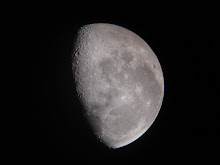
Krieger's Mond-Atlas, published by König


Rudolf König
August 18, 1865 – January 30, 1927

Rudolf König was an Austrian merchant, amateur astronomer and selenographer. He was born in Vienna and received his technical education in Leipzig. After graduation he went into his father's business. As he had an interest in astronomy, in 1906 he built a private observatory in Vienna. From this observatory he carried out many observations of the Moon. His primary telescope was a Carl Zeiss 21-cm reflector in a massive equatorial mount designed for astrophotography.

König was interested in lunar mapping studies and was the editor of the second part of J. N. Krieger's Mond-Atlas (1898-1912). In 1912 he published a volume of illustrations of the Moon made by his then deceased friend. He also made extensive observations of comets and star clusters and determined the exact position of 8,000 astronomical objects.

After his death his widow sold his telescope to the Czech Astronomical Society "for the establishment of an observatory." The instrument is now operated by the Prague Observatory. König's extensive technical library and other astronomical equipment went to the University Observatory of Vienna. His 6-meter wide private observatory dome still exists today, but is no longer used for observations.

The Lunar crater König is named in his honor.


Tuesday, January 27, 2009

January 27: Issac Roberts


Isaac Roberts
January 27, 1829-July 17, 1904

Isaac Roberts was a Welsh astronomer who was a pioneer in photography of nebulae. He was a member of the Liverpool Astronomical Society in England and was a fellow of the Royal Geological Society. Roberts was also awarded the Gold Medal of the Royal Astronomical Society in 1895.

In 1883, Roberts began experimenting with stellar photography and by 1885 he had built an observatory with a 20-inch reflector. This allowed him to make significant progress in the then-developing field of astronomical photography.

Some deep space objects were too faint to be viewed by a normal telescope. However, these could be revealed using a photographic plate if the exposure was long enough. However, because the Earth rotates, the longer the exposure time was, the blurrier the image would be. On the other hand, if the exposure time was too short, then an image could not be produced due to the faint nature of these deep space objects. Isaac Roberts's solution to this dilemma was to develop a telescope/camera combination that would track the subject, allowing for a long exposure time as well as a clear image.

Some of his notable works include photographs of the Orion Nebula and Pleiades. Most consider Roberts's magnum opus to be a photograph showing the spiral structure of the Great Nebula in Andromeda, taken on December 29, 1888. His long exposure of the Andromeda Nebula revealed that it was actually a spiral nebula, which was quite unexpected at the time. Photographs such as this changed astronomy by revealing the true form of nebulae and clusters.

In addition to his considerable advancements in the field of astro-photography, Roberts also invented a machine called the Stellar Pantograver that could engrave stellar positions on copper plates.