Showing posts with label optics. Show all posts

Tuesday, October 20, 2009

October 20: Christopher Wren


Sir Christopher Wren
October 20, 1632 – February 25, 1723

Christopher Wren was one of the best known and highest acclaimed English architects in history, responsible for rebuilding 55 churches in the City of London after the Great Fire in 1666, including his masterpiece St Paul's Cathedral, completed in 1710.

Educated in Latin and Aristotelian physics at the University of Oxford, Wren was a notable astronomer, geometer, mathematician-physicist as well as an architect. He was a founder of the Royal Society (president 1680–82), and his scientific work was highly regarded by Sir Isaac Newton and Blaise Pascal.

One of Wren's friends, another great scientist and architect in his time, Robert Hooke said of him "Since the time of Archimedes there scarce ever met in one man in so great perfection such a mechanical hand and so philosophical mind."

When a fellow of All Souls, Wren constructed a transparent beehive for scientific observation; he began observing the moon, which was to lead to the invention of micrometers for the telescope. He experimented on terrestrial magnetism and had taken part in medical experiments, performing the first successful injection of a substance into the bloodstream (of a dog).

In Gresham College, he did experiments involving determining longitude through magnetic variation and through lunar observation to help with navigation, and helped construct a 35-foot (11 m) telescope with Sir Paul Neile. Wren also studied and improved the microscope and telescope at this time. He had also been making observations of the planet Saturn from around 1652 with the aim of explaining its appearance. His hypothesis was written up in De corpore saturni but before the work was published, Huygens presented his theory of the rings of Saturn. Immediately Wren recognized this as a better hypothesis than his own and De corpore saturni was never published. In addition, he constructed an exquisitely detailed lunar model and presented it to the king.

A year into Wren's appointment as a Savilian Professor in Oxford, the Royal Society was created and Wren became an active member. As a Savilian Professor, Wren studied thoroughly in mechanics, especially in elastic collisions and pendulum motions, which he studied extensively. He also directed his far-ranging intelligence to the study of meteorology, and fabricated a "weather-clock" that recorded temperature, humidity, rainfall and barometric pressure, which could be used to predict the weather.

Another topic to which Wren contributed was optics. He published a description of an engine to create perspective drawings and he discussed the grinding of conical lenses and mirrors. Out of this work came another of Wren's important mathematical results, namely that the hyperboloid of revolution is a ruled surface. These results were published in 1669. In subsequent years, Wren continued with his work with the Royal Society, although after the 1680s his scientific interests seem to have waned: no doubt his architectural and official duties absorbed all his time.

Mentioned above are only a few of Wren’s scientific works. He also studied in other areas not mentioned, ranging from agriculture, ballistics, water and freezing, to investigating light and refraction only to name a few. Thomas Birch's History of the Royal Society is one of the most important sources of our knowledge not only of the origins of the Society, but also the day to day running of the Society. It is in these records that the majority of Wren’s scientific works are recorded.


Friday, October 16, 2009

October 16: Frederick Eugene Wright


Dr. Frederick Eugene Wright
October 16, 1877 – August 25, 1953

Frederick Wright was an American optician and geophysicist. He was the second president of the Optical Society of America from 1918-1919.

He was born in Marquette, Michigan, and his father was a state geologist. In 1895 his mother took Frederick and his two brothers to Germany where he would complete his education. He was awarded his Ph.D. summa cum laude from the University of Heidelberg.

After returning to the United States, he taught at the Michigan College of Mines and became the Assistant State Geologist. He moved to Washington D.C. in 1904, joining the United States Geological Survey. He then spent some time in exploration of Alaska. In 1906 he joined the Carnegie Institution as a member of their Geophysical Laboratory. He remained on the staff until his retirement in 1944.

In 1906 he met Kathleen Finley and in 1909 they were married. Their daughter Helen Wright (1914-1997) who became a pioneer in the study of science history.

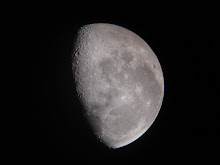
Among his contributions were studies in the military uses of optical glass; physical study of lunar features based on the properties of the reflected light, and the precambrian geology of the region near Lake Superior. At the time of his death he was considered the foremost authority on the Moon.

Wright was co-author of a major 1963 summary: "The Lunar Surface: Introduction" in The Moon, Meteorites and Comets (Edited by Middlehurst and GP Kuiper). F.E. Wright also was responsible for creating one of the most remarkable - and rare - lunar globes ever. Photographic emulsions were deposited on globes and then telescopic images were projected onto the globes. Some globes were made of glass and had light bulbs within - apparently, they "beautifully and realistically simulate the Moon."

He served as the home secretary of the National Academy of Sciences for two decades. He was a member of the Optical Society of America, and was president for three years. In 1941 he became president of the Mineralogical Society of America. He was also a member of the London Physical Society, a fellow of the American Academy of Arts and Sciences.

The crater Wright on the Moon is co-named for him and two others.


Tuesday, October 13, 2009

October 13: Peter Barlow


Peter Barlow
October 13, 1776 – March 1, 1862

Peter Barlow was an English mathematician and physicist.

In 1801, Barlow was appointed assistant mathematics master at the Royal Military Academy, Woolwich, and retained this post until 1847. He contributed articles on mathematics to The Ladies' Diary as well as publishing books such as: An Elementary Investigation of the Theory of Numbers (1811); A New Mathematical and Philosophical Dictionary (1814); and New Mathematical Tables (1814).

The latter became known as Barlow's Tables and gives squares, cubes, square roots, cube roots, and reciprocals of all numbers from 1 to 10,000. These tables were regularly reprinted until 1965, when computers rendered them obsolete. Barlow also contributed largely to the Encyclopaedia Metropolitana.

Barlow made an important contribution to astronomy by inventing the Barlow lens, an achromatic telescope lens in which two glass layers enclosed a colourless liquid (later replaced by a different kind of glass).

In 1823 he was made a fellow of the Royal Society and two years later received its Copley Medal for his work on correcting the deviation in ship compasses caused by the presence of iron in the hull. Some of his magnetic research was done in collaboration with Samuel Hunter Christie. Barlow's Wheel is an early electric motor he invented, while Barlow's law is an (incorrect) law describing electrical conductance.