Showing posts with label physics. Show all posts

Saturday, December 19, 2009

December 19: Albert Michelson


Albert Michelson
December 19, 1852 – May 9, 1931

Albert Abraham Michelson was an American physicist known for his work on the measurement of the speed of light and especially for the Michelson-Morley experiment. In 1907 he received the Nobel Prize in Physics. He became the first American to receive the Nobel Prize in sciences.

Michelson was born in Strzelno, Provinz Posen in the Kingdom of Prussia (now Poland). He moved to the United States with his parents in 1855, when he was two years old.

President Ulysses S. Grant awarded Michelson a special appointment to the U.S. Naval Academy in 1869. During his four years as a midshipman at the Academy, Michelson excelled in optics, heat and climatology as well as drawing. After his graduation in 1873 and two years at sea, he returned to the Academy in 1875 to become an instructor in physics and chemistry until 1879. In 1879, he was posted to the Nautical Almanac Office, Washington, to work with Simon Newcomb, but in the following year, he obtained leave of absence to continue his studies in Europe. He visited the Universities of Berlin and Heidelberg, and the Collège de France and École Polytechnique in Paris.

Michelson was fascinated with the sciences and the problem of measuring the speed of light in particular. While at Annapolis, he conducted his first experiments of the speed of light, as part of a class demonstration in 1877. After two years of studies in Europe, he resigned from the Navy in 1881. In 1883 he accepted a position as professor of physics at the Case School of Applied Science in Cleveland, Ohio and concentrated on developing an improved interferometer. In 1887 he and Edward Morley carried out the famous Michelson-Morley experiment which seemed to rule out the existence of the aether. He later moved on to use astronomical interferometers in the measurement of stellar diameters and in measuring the separations of binary stars.

In 1907, Michelson had the honor of being the first American to receive a Nobel Prize in Physics "for his optical precision instruments and the spectroscopic and meteorological investigations carried out with their aid". He also won the Copley Medal in 1907, the Henry Draper Medal in 1916 and the Gold Medal of the Royal Astronomical Society in 1923.

The Lunar crater Michelson is named in his honor.


Sunday, December 6, 2009

December 6: Yoshio Nishina


Yoshio Nishina
December 6, 1890 – January 10, 1951

Yoshio Nishina was the founding father of modern physics research in Japan. He co-authored the well-known Klein-Nishina Formula. He was a principal investigator of RIKEN and mentored generations of physicists, including two Novel Laureates: Hideki Yukawa and Sin-Itiro Tomonaga. During World War II he was the head of the Japanese atomic program.

Nishina was born in Satosho, Okayama and graduated from Tokyo Imperial University in 1918. After graduation, he became a staff member at RIKEN. In 1921 he was sent to Europe for research. He visited some European universities and institutions, including Cavendish Laboratory, Georg August University of Göttingen, and University of Copenhagen. In Copenhagen he did research with Niels Bohr and they became good friends. In 1928 he wrote a paper on incoherent or Compton scattering with Oskar Klein in Copenhagen, from which the Klein-Nishina formula derives.

In the same year he returned to Japan, where he endeavored to foster an environment for the study of quantum mechanics. He invited some Western scholars to Japan including Heisenberg, Dirac and Bohr to stimulate Japanese physicists. He detected what turned out to be the muon in cosmic rays, independently of Anderson et al.

His research was concerned with cosmic rays and particle accelerator development.

In 1946 he was awarded the Order of Culture by the Emperor of Japan.

The Lunar crater Nishina is named in his honor.


Saturday, December 5, 2009

December 5: Werner Heisenberg


Werner Heisenberg
December 5, 1901 – February 1, 1976

Werner Heisenberg was a German theoretical physicist who made foundational contributions to quantum mechanics and is best known for asserting the uncertainty principle of quantum theory. In addition, he also made important contributions to nuclear physics, quantum field theory, and particle physics.

Heisenberg, along with Max Born and Pascual Jordan, set forth the matrix formulation of quantum mechanics in 1925. Heisenberg was awarded the 1932 Nobel Prize in Physics.

Following the war, he was appointed director of the Kaiser Wilhelm Institute for Physics, which was soon thereafter renamed the Max Planck Institute for Physics. He was director of the institute until it was moved to Munich in 1958, when it was expanded and renamed the Max Planck Institute for Physics and Astrophysics.

Heisenberg was also president of the German Research Council, chairman of the Commission for Atomic Physics, chairman of the Nuclear Physics Working Group, and president of the Alexander von Humboldt Foundation.

Heisenberg studied under Arnold Sommerfeld, who was born on this date in 1868. Sommerfeld was a German theoretical physicist who pioneered developments in atomic and quantum physics, and also educated and groomed a large number of students for the new era of theoretical physics. He introduced the fine-structure constant into quantum mechanics.


Sunday, October 25, 2009

October 25: Henry Norris Russell


Henry Norris Russell
October 25, 1877 – February 18, 1957

Henry Norris Russell was an American astronomer who, along with Ejnar Hertzsprung, developed the Hertzsprung-Russell diagram (1910). In 1923, working with Frederick Saunders, he developed Russell-Saunders coupling which is also known as LS coupling.

Russell was born in 1877 in Oyster Bay, New York. He studied astronomy at Princeton University, obtaining his B.A. in 1897 and his doctorate in 1899, studying under Charles Augustus Young. From 1903 to 1905, he worked at the Cambridge Observatory with Arthur Robert Hinks as a research assistant of the Carnegie Institution and came under the strong influence of George Darwin.

He returned to Princeton to become an instructor in astronomy (1905-1908), assistant professor (1908-1911), professor (1911-1927) and research professor (1927-1947). He was also the director of the Princeton University Observatory from 1912 to 1947.

He co-wrote an influential two-volume textbook in 1927 with Raymond Smith Dugan and John Quincy Stewart: Astronomy: A Revision of Young’s Manual of Astronomy (Ginn & Co., Boston, 1926–27, 1938, 1945). This became the standard astronomy textbook for about two decades. There were two volumes: the first was The Solar System and the second was Astrophysics and Stellar Astronomy. The textbook popularized the idea that a star's properties (radius, surface temperature, luminosity, etc.) were largely determined by the star's mass and chemical composition, which became known as the Vogt-Russell theorem (including Hermann Vogt who independently discovered the result). Since a star's chemical composition gradually changes with age (usually in a non-homogeneous fashion), stellar evolution results.

The Lunar crater Russell is named in his honor.


Saturday, October 24, 2009

October 24: Wilhelm Eduard Weber


Wilhelm Eduard Weber
October 24, 1804 – June 23, 1891

Wilhelm Weber was a German physicist and, together with Carl Friedrich Gauss, inventor of the first electromagnetic telegraph.

During 1831, on the recommendation of Carl Friedrich Gauss, he was hired by the University of Göttingen as professor of physics, at the age of twenty-seven. His lectures were interesting, instructive, and suggestive. Weber thought that, in order to thoroughly understand physics and apply it to daily life, mere lectures, though illustrated by experiments, were insufficient, and he encouraged his students to experiment themselves, free of charge, in the college laboratory.

As a student of twenty years he, with his brother, Ernst Heinrich Weber, Professor of Anatomy at Leipzig, had written a book on the Wave Theory and Fluidity, which brought its authors a considerable reputation. Acoustics was a favourite science of his, and he published numerous papers upon it in Poggendorffs Annalen, Schweigger's Jahrbücher für Chemie und Physik, and the musical journal Carcilia. The 'mechanism of walking in mankind' was another study, undertaken in conjunction with his younger brother, Eduard Weber. These important investigations were published between the years 1825 and 1838. Gauss and Weber constructed the first electromagnetic telegraph during 1833, which connected the observatory with the institute for physics in Göttingen.

Dismissed by the Hanoverian Government for his liberal political opinions, Weber travelled for a time, visiting England, among other countries, and became professor of physics in Leipzig from 1843 to 1849, when he was reinstalled at Göttingen. One of his most important works was the Atlas des Erdmagnetismus ("atlas of geomagnetism"), a series of magnetic maps, and it was chiefly through his efforts that magnetic observatories were instituted. He studied magnetism with Gauss, and during 1864 published his Electrodynamic Proportional Measures containing a system of absolute measurements for electric currents, which forms the basis of those in use.

He was elected a foreign member of the Royal Swedish Academy of Sciences during 1855.

The Lunar crater Weber and the SI unit of magnetic flux, the weber (symbol: Wb) are named in his honor. He is also known for first use of 'c' for speed of light.


Monday, October 19, 2009

October 19: Subrahmanyan Chandrasekhar


Subrahmanyan Chandrasekhar
October 19, 1910 – August 21, 1995

Subrahmanyan Chandrasekhar was an Indian American astrophysicist. He was a Nobel laureate in physics along with William Alfred Fowler for their work in the theoretical structure and evolution of stars. He was the nephew of Indian Nobel Laureate Sir C. V. Raman.

Chandrasekhar served on the University of Chicago faculty from 1937 until his death in 1995 at the age of 84. He became a naturalized citizen of the United States in 1953.

Chandrasekhar (Chandra) was born in Lahore, India (present day Pakistan). Chandra was awarded a Government of India scholarship to pursue graduate studies at the University of Cambridge, where he was admitted to Trinity College and became a research student of Professor R. H. Fowler. On the advice of Prof. P. A. M. Dirac, as part of his graduate studies, Chandra spent a year at the Institut for Teoretisk Fysik in Copenhagen, where he met Prof. Niels Bohr.

In January 1937, Chandrasekhar was recruited to the University of Chicago faculty as Assistant Professor by Dr. Otto Struve and President Robert Maynard Hutchins. He was to remain at the university for his entire career, becoming Morton D. Hull Distinguished Service Professor of Theoretical Astrophysics in 1952 and attaining emeritus status in 1985.

Chandrasekhar developed a style of working continuously in one specific area of physics for a number of years; consequently, his working life can be divided into distinct periods. He studied stellar structure, including the theory of white dwarfs, during the years 1929 to 1939, and subsequently focused on stellar dynamics from 1939 to 1943. Next, he concentrated on the theory of radiative transfer and the quantum theory of the negative ion of hydrogen from 1943 to 1950. This was followed by sustained work on hydrodynamic and hydromagnetic stability from 1950 to 1961. In the 1960s, he studied the equilibrium and the stability of ellipsoidal figures of equilibrium, but also general relativity. During the period, 1971 to 1983 he studied the mathematical theory of black holes, and, finally, during the late 80s, he worked on the theory of colliding gravitational waves.

From 1952 to 1971 Chandrasekhar was editor of the Astrophysical Journal.

During the years 1990 to 1995, Chandrasekhar worked on a project devoted to explaining the detailed geometric arguments in Sir Isaac Newton's Philosophiae Naturalis Principia Mathematica using the language and methods of ordinary calculus. The effort resulted in the book Newton's Principia for the Common Reader, published in 1995. Chandrasekhar was an honorary member of the International Academy of Science.

Chandrasekhar's most famous success was the astrophysical Chandrasekhar limit. The limit describes the maximum mass of a white dwarf star, ~1.44 solar masses, or equivalently, the minimum mass, above which a star will ultimately collapse into a neutron star or black hole (following a supernova). The limit was first calculated by Chandrasekhar in 1930 during his maiden voyage from India to Cambridge, England for his graduate studies.

In 1999, NASA named the third of its four "Great Observatories'" after Chandrasekhar. The Chandra X-ray Observatory was launched and deployed by Space Shuttle Columbia on July 23, 1999.

The asteroid 1958 Chandra is also named after Chandrasekhar.

Chandrasekhar was the mathematics professor of the renowned American astronomer Carl Sagan at the University of Chicago. In his book The Demon-Haunted World Sagan wrote "I discovered what true mathematical elegance is from Subrahmanyan Chandrasekhar."


Sunday, October 18, 2009

October 18: Pascual Jordan


Pascual Jordan
October 18, 1902 - July 31, 1980

Pascual Jordan was a theoretical and mathematical physicist who made significant contributions to quantum mechanics and quantum field theory. He contributed much to the mathematical form of matrix mechanics, and developed canonical anticommutation relations for fermions. While the Jordan algebra he invented is no longer employed in quantum mechanics, it has found other mathematical applications.

Jordan joined the Nazi party and became a brownshirt, a political affiliation which isolated him within the physics community.

Jordan enrolled in the Hanover Technical University in 1921 where he studied an eclectic mix of zoology, mathematics, and physics. As was typical for a German university student of the time, he shifted his studies to another university before obtaining a degree. Göttingen University, his destination in 1923, was then at the very zenith of its prowess and fame in mathematics and the physical sciences. At Göttingen Jordan became an assistant first to mathematician Richard Courant and then to physicist Max Born.

Together with Max Born and Werner Heisenberg he was co-author of an important series of papers on quantum mechanics. He went on to pioneer early quantum field theory before largely switching his focus to cosmology before World War II.

Jordan devised a type of non-associative algebras, now named Jordan algebras in his honor, in an attempt to create an algebra of observables for quantum mechanics and quantum field theory. Today, von Neumann algebras are employed for this purpose. Jordan algebras have since been applied in projective geometry and number theory.

Had Jordan not joined the Nazi party, it is conceivable that he could have shared the 1954 Nobel Prize in Physics awarded to Max Born.


Saturday, October 17, 2009

October 17: Peter Nilson


Peter Nilson
October 17, 1937 – March 8, 1998

Peter Nilson was a Swedish astronomer and novelist. Active at Uppsala University, he compiled a catalogue of galaxies. He was appreciated for a number of essay books (primarily about science) and for a number of science fiction novels like "The Space Guardian."

He was born in a Smålandian village and under the early teens a farmer, but science, with its celebrities such as Charles Darwin and Albert Einstein made such an impression on him, as to motivate him to accomplish college studies by letter correspondence.

In the early 1960's he began his studies in Uppsala University, initially in mathematics, and thereafter theoretical physics, aesthetics, history of ideas and astronomy.

He was elected a member of the Royal Swedish Academy of Sciences in 1993.


Tuesday, October 13, 2009

October 13: Peter Barlow


Peter Barlow
October 13, 1776 – March 1, 1862

Peter Barlow was an English mathematician and physicist.

In 1801, Barlow was appointed assistant mathematics master at the Royal Military Academy, Woolwich, and retained this post until 1847. He contributed articles on mathematics to The Ladies' Diary as well as publishing books such as: An Elementary Investigation of the Theory of Numbers (1811); A New Mathematical and Philosophical Dictionary (1814); and New Mathematical Tables (1814).

The latter became known as Barlow's Tables and gives squares, cubes, square roots, cube roots, and reciprocals of all numbers from 1 to 10,000. These tables were regularly reprinted until 1965, when computers rendered them obsolete. Barlow also contributed largely to the Encyclopaedia Metropolitana.

Barlow made an important contribution to astronomy by inventing the Barlow lens, an achromatic telescope lens in which two glass layers enclosed a colourless liquid (later replaced by a different kind of glass).

In 1823 he was made a fellow of the Royal Society and two years later received its Copley Medal for his work on correcting the deviation in ship compasses caused by the presence of iron in the hull. Some of his magnetic research was done in collaboration with Samuel Hunter Christie. Barlow's Wheel is an early electric motor he invented, while Barlow's law is an (incorrect) law describing electrical conductance.


Saturday, October 10, 2009

October 10: Henry Cavendish


Henry Cavendish
October 10, 1731 - February 24, 1810

Henry Cavendish, FRS was a British scientist noted for his discovery of hydrogen or what he called "inflammable air". He described the density of inflammable air, which formed water on combustion, in a 1766 paper "On Factitious Airs". Antoine Lavoisier later reproduced Cavendish's experiment and gave the element its name. Cavendish is also known for the Cavendish experiment, his measurement of the Earth's density, and early research into electricity.

Henry Cavendish was born in Nice, France, where his family was living at the time. His mother was Lady Anne Grey, daughter of the Duke of Kent and his father was Lord Charles Cavendish, son of 2nd Duke of Devonshire.

At age 11, Cavendish was a pupil at Peter Newcome's School in Hackney. At age 18 he entered the University of Cambridge in St Peter's College, now known as Peterhouse, but left four years later without graduating. His first paper, "Factitious Airs", appeared thirteen years later, in 1766.

Cavendish was silent, and solitary, viewed as somewhat eccentric, he only spoke to his female servents by notes and formed no close personal relationships outside his family. By one account, Cavendish had a back staircase added to his house in order to avoid encountering his housekeeper because he was especially shy of women.

Because of his asocial and secretive behaviour, Cavendish often avoided publishing his work, and much of his findings were not even told to his fellow scientists. In the late nineteenth century, long after his death, James Clerk Maxwell looked through Cavendish's papers and found things for which others had been given credit. Examples of what was included in Cavendish's discoveries or anticipations were Richter's Law of Reciprocal Proportions, Ohm's Law, Dalton's Law of Partial Pressures, principles of electrical conductivity (including Coulomb's Law), and Charles's Law of Gases.

In addition to his achievements in chemistry, Cavendish is also known for the Cavendish experiment, the first to measure the force of gravity between masses in a laboratory and to produce an accurate value for the Earth's density. His work led others to accurate values for the gravitational constant (G) and the Earth's mass.

The Lunar crater Cavendish is named in his honor.


Friday, October 9, 2009

October 9: Karl Schwarzschild


Karl Schwarzschild
October 9, 1873 – May 11, 1916

Karl Schwarzschild was a German physicist. He is also the father of astrophysicist Martin Schwarzschild.

He is best known for providing the first exact solution to the Einstein field equations of general relativity, for the limited case of a single spherical non-rotating mass, which he accomplished in 1915, the same year that Einstein first introduced general relativity. The Schwarzschild solution, which makes use of Schwarzschild coordinates and the Schwarzschild metric, leads to the well-known Schwarzschild radius, which is the size of the event horizon of a non-rotating black hole.

Schwarzschild was born in Frankfurt am Main. He was something of a child prodigy, having a paper on celestial mechanics published when he was only sixteen. He studied at Strasbourg and Munich, obtaining his doctorate in 1896 for a work on Jules Henri Poincaré's theories.

From 1897, he worked as assistant at the Kuffner observatory in Vienna. From 1901 until 1909 he was a professor at the prestigious institute at Göttingen, where he had the opportunity to work with some significant figures including David Hilbert and Hermann Minkowski. Schwarzschild became the director of the observatory in Göttingen. He moved to a post at the Astrophysical Observatory in Potsdam in 1909.

From 1912, Schwarzschild was a member of the Prussian Academy of Sciences.

While serving on the front in Russia in 1915, he began to suffer from a rare and painful skin disease called pemphigus. Nevertheless, he managed to write three outstanding papers, two on relativity theory and one on quantum theory. His papers on relativity produced the first exact solutions to the Einstein field equations, and a minor modification of these results gives the well-known solution that now bears his name: the Schwarzschild metric.

Thousands of dissertations, articles, and books have since been devoted to the study of Schwarzschild's solutions to the Einstein field equations. However, although Schwarzschild's best known work lies in the area of general relativity, his research interests were extremely broad, including work in celestial mechanics, observational stellar photometry, quantum mechanics, instrumental astronomy, stellar structure, stellar statistics, Halley's comet, and spectroscopy.

Some of his particular achievements include measurements of variable stars, using photography, and the improvement of optical systems, through the perturbative investigation of geometrical aberrations.

The Lunar crater Schwarzschild, the Karl Schwarzschild Medal, the Karl Schwarzschild Observatory and more are named in his honor.


Thursday, October 8, 2009

October 8: Ejnar Hertzsprung


Ejnar Hertzsprung
October 8, 1873 - October 21, 1967

Ejnar Hertzsprung was a Danish chemist and astronomer.

In the period 1911-1913, together with Henry Norris Russell, he developed the Hertzsprung-Russell diagram.

In 1913 he determined the distances to several Cepheid variable stars by statistical parallax, and was thus able to calibrate the relationship discovered by Henrietta Leavitt between Cepheid period and luminosity. In this determination he made a mistake, possibly a slip of the pen, putting the stars 10 times too close. He used this relationship to estimate the distance to the Small Magellanic Cloud.

From 1919 to 1946 Hertzsprung worked at Leiden Observatory in The Netherlands, from 1937 as director. Perhaps his greatest contribution to astronomy was the development of a classification system for stars to divide them by spectral type, stage in their development, and luminosity. The "Hertzsprung-Russell Diagram" was used for many years as a classification system to explain stellar types and evolution.

He discovered two asteroids, 1627 Ivar (25 September 1929) and 1702 Kalahari (7 July 1924)

Hertzsprung received the Gold Medal of the Royal Astronomical Society in 1929 and the Bruce Medal in 1937.

The Lunar crater Hertzsprung and the asteroid 1693 Hertzsprung are named in his honor.


Tuesday, October 6, 2009

October 6: Meghnad Saha


Meghnad Saha
October 6, 1893 – February 16, 1956

Meghnad Saha was an Indian astrophysicist best known for his development of the Saha equation, used to describe chemical and physical conditions in stars.

Saha was a professor at Allahabad University from 1923 to 1938, and thereafter a professor and Dean of the Faculty of Science at the University of Calcutta until his death in 1956. He became Fellow of the Royal Society in 1927. He was president of the 21st session of the Indian Science Congress in 1934.

Saha was fortunate to have brilliant teachers and class fellows. In his student days, Jagadish Chandra Bose and Prafulla Chandra Roy were at the pinnacle of their fame. Amongst his class fellows were Satyendra Nath Bose, Jnan Ghosh and J. N. Mukherjee. In later life he was close to Amiya Charan Banerjee, a renowned mathematician at Allahabad University.

Meghnad Saha's best-known work concerned the thermal ionisation of elements, and it led him to formulate what is known as the Saha equation. This equation is one of the basic tools for interpretation of the spectra of stars in astrophysics. By studying the spectra of various stars, one can find their temperature and from that, using Saha's equation, determine the ionisation state of the various elements making up the star.

Saha also helped to build several scientific institutions, such as the Physics Department in Allahabad University and the Institute of Nuclear Physics in Calcutta. He founded the journal Science and Culture and was the editor until his death. He was the leading spirit in organizing several scientific societies, such as the National Academy of Science (1930), the Indian Physical Society (1934), Indian Institute of Science (1935) and the Indian Association for the Cultivation of Science (1944). A lasting memorial to him is the Saha Institute of Nuclear Physics, founded in 1943 in Kolkata.

He also invented an instrument to measure the weight and pressure of solar rays.

"The impetus given to astrophysics by Saha’s work can scarcely be overestimated, as nearly all later progress in this field has been influenced by it and much of the subsequent work has the character of refinements of Saha’s ideas." - S. Rosseland

The Lunar crater Saha is named in his honor.


Tuesday, September 29, 2009

September 29: Gustav Mie


Gustav Adolf Feodor Wilhelm Ludwig Mie
September 29, 1869 – February 13, 1957

Gustav Mie was a German physicist.

Mie was born in Rostock. From 1886 he studied mathematics and physics at the University of Rostock. In addition to his major subjects, he also attended lectures in chemistry, zoology, geology, mineralogy, astronomy as well as logic and metaphysics. In 1889 he continued his studies at the University of Heidelberg and received a doctorate degree in mathematics at the age of 22.

In 1897 he got his Habilitation at the University of Göttingen in theoretical physics and in 1902 became extraordinary professor for theoretical physics at the University of Greifswald. In 1917 he became full professor for experimental physics at Martin Luther University of Halle-Wittenberg. In 1924 he became Professor at the University of Freiburg, where he worked up to his retirement in 1935.

During his Greifswald years he worked on the computation of scattering of an electromagnetic wave by a homogeneous dielectric sphere, which was published in 1908 under the title of “Contributions to the optics of turbid media, particularly of colloidal metal solutions” in Annalen der Physik. The term Mie scattering is still related to his name. Using Maxwell's electromagnetic theory applied to spherical Gold particles Gustav Mie provided a theoretical treatment of plasmon resonance absorption of Gold colloids. The sharp absorption bands depend on the particle size and explain the change in colour that occurs as the size of the colloid nanoparticles is increased from 20 to 1600 nm. He wrote further important contributions to electromagnetism and also to relativity theory.

In addition he was employed on measurements units and finally developed his Mie system of units in 1910 with the basic units Volt, Ampere, Coulomb and Second (VACS-system).

A crater on Mars was named in his honor and a building of the University of Freiburg carries his name.


Monday, September 28, 2009

September 28: Ismaël Bullialdus


Ismaël Bullialdus
September 28, 1605 - November 25, 1694

Ismaël Bullialdus was a French astronomer. He was born Ismaël Boulliau in Loudun, Vienne, France, the first surviving son to Ismaël Boulliau, a notary by profession and amateur astronomer.

Bullialdus was a friend of Pierre Gassendi, Christiaan Huygens, Marin Mersenne, and Blaise Pascal, and an active supporter of Galileo Galilei and Nicolaus Copernicus. It is for his astronomical and mathematical works that he is best known. Chief among them is his Astronomia philolaica, (published 1645). In this work he strongly supported Kepler's hypothesis that the planets travel in elliptical orbits around the Sun, but argued against the physical theory the latter had proposed to explain them. In particular, he objected to Kepler's proposal that the strength of the force exerted on the planets by the Sun would decrease in inverse proportion to their distance from it. He argued that if such a force existed it would instead have to follow an inverse-square law:
As for the power by which the Sun seizes or holds the planets, and which, being corporeal, functions in the manner of hands, it is emitted in straight lines throughout the whole extent of the world, and like the species of the Sun, it turns with the body of the Sun; now, seeing that it is corporeal, it becomes weaker and attenuated at a greater distance or interval, and the ratio of its decrease in strength is the same as in the case of light, namely, the duplicate proportion, but inversely, of the distances that is, 1/d².
However, Bullialdus did not believe that any such force did in fact exist. After writing the above-quoted passage, he then went on to write:
... I say that the Sun is moved by its own form around its axis, by which form it was ignited and made light, indeed I say that no kind of motion presses upon the remaining planets ... indeed [I say] that the individual planets are driven round by individual forms with which they were provided ...
In his Principia Mathematica of 1687, Isaac Newton acknowledged that Bullialdus's determination of the sizes of the planets' orbits ranked with Kepler's as the most accurate then available.

Bullialdus was one of the earliest members of the Royal Society, London, having been elected on April 4, 1667, seven years after its founding.

The Lunar crater Bullialdus is named in his honor.


Saturday, September 26, 2009

September 26: Christopher Hansteen


Christopher Hansteen
September 26, 1784 – April 11, 1873

Christopher Hansteen was a Norwegian geophysicist, astronomer and physicist.

In 1807 Hansteen began the inquiries in terrestrial magnetism with which his name is especially associated. His first scientific publication was printed in Journal de Physique, following a contest on magnetic axes created in 1811 by the Royal Danish Academy of Sciences and Letters. In 1813 he was given a research scholarship by the recently established (in 1811) Royal Frederick University in Christiania, with a promise of a future academic position.

Working as a lecturer from 1814, in 1816 Hansteen was promoted to professor of astronomy and applied mathematics. He was the editor of the official Norwegian almanac from 1815, manager of the city astronomical observatory from the same year and co-director of the Norwegian Mapping and Cadastre Authority from 1817. In 1819 he published a volume of researches on terrestrial magnetism, which was translated into German under the title of Untersuchungen über den Magnetismus der Erde, with a supplement containing Beobachtungen der Abweichung und Neigung der Magnetnadel and an atlas. By the rules there framed for the observation of magnetical phenomena Hansteen hoped to accumulate analyses for determining the number and position of the magnetic poles of the Earth. In 1822 he co-founded Norway's first journal on natural sciences, Magazin for Naturvidenskaberne. He sat as editor-in-chief for eight years.

In the course of his research he travelled over Finland and the greater part of his own country; and from 1828 to 1830 he undertook, in company with Georg Adolf Erman and with the cooperation of Russia, a government-funded mission to Western Siberia. Shortly after the return of the mission, in 1833 Hansteen moved with his family into the observatory, which was created from drawings by the architect Christian Heinrich Grosch. A magnetic observatory was added in 1839.

From 1835 to 1838 he published textbooks on geometry and mechanics, largely a reaction to his former research assistant Bernt Michael Holmboe's textbooks. In 1842 Hansteen wrote his Disquisitiones de mutationibus, quas patitur momentum acus magneticae. He also contributed various papers to different scientific journals, especially Magazin for Naturvidenskaberne.

Hansteen was a member of the Royal Norwegian Society of Sciences and Letters from 1818 and of the Norwegian Academy of Science and Letters from 1857, as well as several learned societies in other countries, including the Royal Swedish Academy of Sciences (1822). He was a member of the board of the Royal Norwegian Society for Development for many years, and also chaired the board of the Norwegian National Academy of Craft and Art Industry.

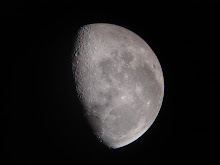
The crater Hansteen and the mountain Mons Hansteen on the Moon are named in his honor.


Friday, September 25, 2009

September 25: Ole Rømer


Ole Christensen Rømer
September 25, 1644 – September 19, 1710

Ole Rømer was a Danish astronomer who in 1676 made the first quantitative measurements of the speed of light.

Ole Rømer went to the University of Copenhagen in 1662, at which his mentor was Rasmus Bartholin. Rømer was given every opportunity to learn mathematics and astronomy using Tycho Brahe's astronomical observations, as Bartholin had been given the task of preparing them for publication.

After studies in Copenhagen, Rømer joined the observatory of Uraniborg on the island of Hven, near Copenhagen, in 1671. Over a period of several months, Jean Picard and Rømer observed about 140 eclipses of Jupiter's moon Io, while in Paris Giovanni Domenico Cassini observed the same eclipses. By comparing the times of the eclipses, the difference in longitude of Paris to Uranienborg was calculated.

Cassini had observed the moons of Jupiter between 1666 and 1668, and discovered discrepancies in his measurements that, at first, he attributed to light having a finite speed. In 1672 Rømer went to Paris and continued observing the satellites of Jupiter as Cassini's assistant. Rømer added his own observations to Cassini's and observed that times between eclipses (particularly those of Io) got shorter as Earth approached Jupiter, and longer as Earth moved farther away. Cassini published a short paper in August 1675 where he states: This second inequality appears to be due to light taking some time to reach us from the satellite; light seems to take about ten to eleven minutes to cross a distance equal to the half-diameter of the terrestrial orbit.

Oddly, Cassini seems to have abandoned this reasoning, which Rømer adopted and set about buttressing in an irrefutable manner, using a selected number of observations performed by Picard and himself between 1671 and 1677. Rømer presented his results to the French Academy of Sciences, and it was summarised soon after by an anonymous reporter in a short paper, Démonstration touchant le mouvement de la lumière trouvé par M. Roemer de l'Académie des sciences, published 7 December 1676 in the Journal des sçavans. Unfortunately the paper bears the stamp of the reporter failing to understand Rømer's presentation, and as the reporter resorted to cryptic phrasings to hide his lack of understanding, he obfuscated Rømer's reasoning in the process. Unfortunately Rømer himself never published his results.

Rømer never gave a value for the speed of light. However, many others calculated a speed from his data, the first being Christiaan Huygens; after corresponding with Rømer and eliciting more data.

Rømer's view that the velocity of light was finite was not fully accepted until measurements of the so-called aberration of light were made by James Bradley in 1727.

In 1809, again making use of observations of Io, but this time with the benefit of more than a century of increasingly precise observations, the astronomer Jean Baptiste Joseph Delambre reported the time for light to travel from the Sun to the Earth as 8 minutes and 12 seconds. Depending on the value assumed for the astronomical unit, this yields the speed of light as just a little more than 300,000 kilometres per second.

A plaque at the Observatory of Paris, where the Danish astronomer happened to be working, commemorates what was, in effect, the first measurement of a universal quantity made on this planet.

The Lunar crater Römer is named in his honor.


Wednesday, September 16, 2009

September 16: Francesco Maurolico


Francesco Maurolico
September 16, 1494 - July 21, 1575

Francesco Maurolico (in Latin, Franciscus Maurolycus) was an Italian mathematician and astronomer. Throughout his lifetime, he made contributions to the fields of geometry, optics, conics, mechanics, music, and astronomy.

Between 1548 and 1550, Maurolico stayed at the castle of Pollina in Sicily as a guest of the marquis Giovanni II Ventimiglia, and utilized the castle tower in order to carry out astronomical observations.

Maurolico's astronomical observations include a sighting of the supernova that appeared in Cassiopeia in 1572. Tycho Brahe published details of his observations in 1574; the supernova is now known as Tycho's Supernova.

In 1569, he was appointed professor at the University of Messina.

Maurolico's Photismi de lumine et umbra and Diaphana concern the refraction of light and attempted to explain the natural phenomenon of the rainbow. He also studied the camera obscura. His Arithmeticorum libri duo (1575) includes the first known proof by mathematical induction.

Maurolico published a Cosmographia in which he described a methodology for measuring the earth, which was later employed by Jean Picard in measuring the meridian in 1670.

Maurolico published an edition of Aristotle's Mechanics, and a work on music. He summarized Ortelius's Theatrum orbis terrarum and also wrote Grammatica rudimenta (1528) and De lineis horariis. He made a map of Sicily, which was published in 1575.

Maurolico worked on ancient mathematical texts: Theodosius of Bithynia, Menelaus of Alexandria, Autolycus of Pitane, Euclid, Apollonius of Perga and Archimedes. His didn't make new translations, but working on the existing ones, he provided new and sound interpretations of Greek mathematics.

The lunar crater Maurolycus is named after him.


Friday, September 11, 2009

September 11: Mary Watson Whitney


Mary Watson Whitney
September 11, 1847 – January 20, 1921

Mary Watson Whitney was an American astronomer and for 22 years the head of the Vassar Observatory.

Whitney was born in Waltham, Massachusetts in 1847. She went to school in Waltham and graduated from the public high school in 1863. Afterwards she entered Vassar College, where she met the astronomer Maria Mitchell.

She got her degree in 1868 and returned to Waltham to care for her widowed mother. At that time she worked as a teacher in Auburndale, Massachusetts.

Starting in 1869 she had some courses about quaternions (at Harvard) and celestial mechanics by Benjamin Peirce. She got her masters degree from Vassar in 1872, afterwards she went to Zürich for 3 years. Returning to the U.S. she became a teacher at her hometown high school until she became an assistant of Maria Mitchell in Vassar.

In 1888 she fellowed Mitchell as professor and as director of the observatory there until she retired in 1910 for health reasons. She died in Waltham in 1921.


Monday, September 7, 2009

September 7: James Van Allen


James Alfred Van Allen
September 7, 1914 – August 9, 2006

James Van Allen was an American space scientist at the University of Iowa. The Van Allen radiation belts were named after him, following the 1958 satellite missions (Explorer 1 and Explorer 3) in which Van Allen had argued that a Geiger counter should be used to detect charged particles.

Van Allen received his Bachelor of Science degree, summa cum laude, from Iowa Wesleyan College in 1935. During his undergraduate years, he studied with Professor Thomas Poulter, a first-class physicist. He tracked meteors, conducted a magnetic survey of Mount Pleasant, and measured cosmic rays at ground level. He earned his master’s degree in solid state physics and his Ph.D. in nuclear physics from the University of Iowa. His doctoral research was on measuring the cross-section of the deuteron-deuteron reaction.

As a staff physicist for the Department of Terrestrial Magnetism of the Carnegie Institution in Washington, D.C., Van Allen worked on developing photoelectric and radio proximity fuzes for bombs, rockets, and gun-fired projectiles. It was here that Dr. Van Allen acquired his interest in cosmic rays.

In 1950 an event occurred that began small but was to affect the future of Van Allen and all his countrymen. In March, British Physicist Sydney Chapman dropped in on Van Allen [and] remarked that he would like to meet other scientists in the Washington area. Van Allen got on the phone, soon gathered eight or ten top scientists (Lloyd Berkner, S. Fred Singer, and Harry Vestine) in the living room of his small brick house. ‘It was what you might call a pedigreed bull session,’ he says. ... The talk turned to geophysics and the two ‘International Polar Years’ that had enlisted the world’s leading nations to study the Arctic and Antarctic regions in 1882 and 1932. Someone suggested that with the development of new tools such as rockets, radar and computers, the time was ripe for a worldwide geophysical year. The other men were enthusiastic, and their enthusiasm spread around the world from Washington DC. From this meeting Lloyd Berkner and other participants proposed to the International Council of Scientific Unions that an IGY be planned for 1957-58 during the maximum solar activity). ... The International Geophysical Year (1957-58) stimulated the U.S. Government to promise earth satellites as geophysical tools. The Soviet government countered by rushing its Sputniks into orbit. The race into space or Space Race may be said to have started in Van Allen’s living room that evening in 1950.
– TIME, 1959

On October 4, 1957 the Soviet Union (USSR) successfully launched Sputnik 1, the world's first artificial satellite, as part of their participation in the IGY.

The first American satellite, Explorer 1, was launched into Earth's orbit on January 31, 1958 on a Jupiter C missile from Cape Canaveral, Florida. Aboard Explorer 1 were a micrometeorite detector and a cosmic ray experiment designed by Dr. Van Allen and his graduate students. Data from Explorer 1 and Explorer 3 (launched March 26, 1958) were used by the Iowa group to make the first space-age scientific discovery: the existence of a doughnut-shaped region of charged particle radiation trapped by Earth’s magnetic field.

Pioneer 3, the third intended U.S. International Geophysical Year lunar probe under the direction of NASA with the Army acting as executive agent, was launched from the Atlantic Missile Range by a Juno II rocket. The primary objective of the flight, to place the 12.95 pound (5.87 kg) scientific payload in the vicinity of the moon, failed. Pioneer III did reach an altitude of 63,000 miles (101 Mm), providing Van Allen additional data that led to discovery of a second radiation belt. Trapped radiation starts at an altitude of several hundred miles from Earth and extends for several thousand miles into space. The Van Allen radiation belts are named for Dr. James Van Allen, their discoverer.

In 1959 TIME magazine credited James Van Allen as the man most responsible for giving the U.S. “a big lead in scientific achievement.” They called Van Allen “a key figure in the cold war’s competition for prestige. ...Today he can tip back his head and look at the sky. Beyond its outermost blue are the world-encompassing belts of fierce radiation that bear his name. No human name has ever been given to a more majestic feature of the planet Earth.”